

Water is one of the many resources that have been over-exploited: water tables are emptying and rivers are drying up. It is estimated that a quarter of humanity lives in water-scarce areas. According to the FAO, agriculture accounts for 70% of water use.
However, 85% of irrigation systems operate by “submersion”, i.e. by pouring water into a trench. This system wastes an enormous amount of water, which seeps into the soil, carrying some of the nutrients underground. Only 50% of the water used in this way is mobilized by the plants.
N-Drip proposes an alternative: a drip irrigation system that saves 70% of water, increases yields by 20 to 30% and limits the use of pesticides.
Conventional drip irrigation, much more water-efficient than the submersion system, was however more costly because it required energy to pump the water and filters to prevent particles in the water from clogging the holes.
The N-Drip system solves both these problems with a gravity-based system. By mobilizing the topography of the land, N-Drip creates a gentle slope along the entire length of the system, removing the need for a pump.
N-Drip, was founded in 2015 by Prof. Uri Shani, a former director of the Israeli Water Authority, along with Ariel Halperin and Ran Ben-Or. N-Drip raised €50M and was awarded the Overall Award Excellence in Disruptive Solution by the Financial Times and the International Finance Corporation in 2019.
MyEasyFarm is a precision farming startup based in Bezannes (near Reims, France) and founded by two brothers: Jean-Baptiste and François Thierart.
The company is developing an online platform that facilitates data exchange between agricultural equipment and centralizes precision farming solutions (machines, weather sensors, decision-support software, etc.) on a single interface. This is what we call a “FMIS (Farm Management Information System)”. This platform also has its own functionalities, such as planning, cost evaluation, equipment tracking and, above all, management of both plots and what happens within them (intra-plot management). The idea is to make it easier for farmers to manage their operations and improve their competitiveness and profitability, while preserving the environment.
The company is also developing
- “My Easy Carbon”, an advisory application (known as OAD, decision support) based on the Label Bas Carbone Grandes Cultures (Low Carbon Label for Field Crops)
- “My Easy Viti”, which seems to be based on the same principle as MyEasyFarm, but specialized for viticulture.
I won’t mention it here, as it seems secondary.

Source : www.myeasyfarm.com

Source : www.myeasyfarm.com
The co-founder, Francois Thierart, answered my questions about his project.
Interview with Francois Thierart, co-founder of MyEasyFarm
Here’s my transcript of our discussion.
- What’s the ROI for farmers?
We’re in the process of assessing the exact impact, but overall, a number of articles estimate fertilizer and sowing modulation [varying the spacing between sowings depending on the zone] at a saving of several tens of euros per hectare. For example, an article in the newspaper La Coopérative estimates savings of €80. Modulating fertilization: 30/40
We also save an enormous amount of time filling out PAC / Phyto reports. These are very cumbersome and tedious formalities: having them pre-filled is a real relief for farmers.
- How long does it take to learn how to use your platform?
We designed our software to be as easy to use as possible (hence the name :p). In general, basic functions are mastered almost instantly. The more advanced functions sometimes require a little support, but this never exceeds 1 or 2 hours.
- What are the crops for which your solution is optimal? Do you have the global volume (= the size of the market it represents)?
We mainly target farms with modern equipment, which are generally those with more than 100 hectares. There are 100,000 such farms in France. We estimate our market at €40 million a year for France and €260 million for Europe.
- Your solution sounds really great. What’s stopping it from being implemented on every farm?
The main obstacle is that digital farming hasn’t yet entered the mainstream. It’s hard to popularize the benefits of this solution.
- Do you have any contacts in the farming world?
We use intermediaries such as cooperatives and equipment dealers to reach farmers.
- Who are your competitors? In France?
Our main competitor is FieldView. Our big advantage over them is that they belong to Bayer, whereas we are independent and have the “DataAgri” label, because we guarantee that the data we collect will not be resold or used for commercial targeting. The difference is radical.
There’s also FarmFacts, but we don’t think they’re a threat. [NdA: Indeed, when you see their site…]
- Can you tell me about your strengths in general?
We’re one of only 5 companies [platforms?] with ISOBUS certification. This is an international standard that enables us to communicate with a large proportion of the world’s agricultural equipment.
We can manage plots square meter by square meter, and not just plot by plot like most of our competitors.
News
MyEasyFarm is part of La Ferme Digitale and is present at agricultural trade shows (Salon de l’Agriculture, Salon des ETA, Sitevi, Sommet de l’élevage, Innov’Agri, etc.).
Very interesting functionalities
MyEasyFarm supports farmers on a daily basis, enabling them to make the right decisions and be more efficient in optimizing competitiveness and profitability, while preserving the environment.
https://www.myeasyfarm.com/
MyEasyFarm is an aggregator of applications that provides farmers with a global vision of their operation. It’s also interesting for creators of precision farming solutions, who see their user experience improve considerably. There are many functionalities. You have several aspects:
- a managerial dimension (which equipment to assign to which people for which tasks, automated documentation)
- an administrative/managerial dimension (knowing your costs, managing your plots, etc.)
- an agronomic dimension (weather, input modulation, ISOBUS interoperability with farm equipment to receive data, data analysis, etc.)
This facilitates farm management and enables farmers to optimize their day-to-day decisions autonomously. By increasing yield per unit of input, the farmer improves profitability while preserving the environment.
An ecosystem role?
Personally, however, it’s the potential ecosystemic dimension that appeals to me. The aggregation function means that MyEasyFarm is, or could be, the intermediary between precision farming products and their user experience, which would be a very strong position.
At the same time, it brings value to all stakeholders, farmers and solution producers alike.
Couldn’t MyEasyFarm bring farmers and entrepreneurs together, for example through events or feature articles, training courses, etc.? Partnerships could be forged with the many players in the agritech sector, who could act as relays for new solutions. What’s more, by being in close contact with a wider variety of customers, each company’s solutions could improve even further.
Quite logically, with this partnership-building role, solutions designed would be optimized for MyEasyFarm (and vice versa). This social position can be an extremely solid moat. This is all the more true as the market is very young and very promising. Moving fast is going to be decisive.
I’m not an expert in these social relationships and don’t know this sector inside out, but it sounds like a great idea.
All in all, MyEasyFarm could become the HUB of precision agriculture and considerably accelerate its development. A potential unicorn? It’s very possible, only time will tell. 🙂
I hope you enjoyed this article. Don’t hesitate to tell me what you think of my analysis 😉
Moltex is a British company developing small modular molten-salt nuclear reactors.
Moltex technology: small molten-salt nuclear reactors
Moltex produces fast neutron reactors using molten salts as a coolant: “stable salt reactors” (RSS). The assemblies are long rods, 10mm in diameter and 1.6 meters long, with a small bell at the end to allow the gases produced during fission to escape. The fuel is mixed with salts melted in the rod: 2/3 sodium chloride and 1/3 a mixture containing plutonium(Wikipedia)
These reactors would be particularly safe, as they would be unable to generate cesium and iodine, the dangerous radioactive gases that caused problems in the Fukushima and, above all, Chernobyl accidents. What’s more, the reactor is completely self-regulating. No active system or operator would be required.
The molten salts produce heat of 750°C. The initial cost of RSS would be €1,500/kW, compared with €2,930 for a coal-fired power plant and €6,750 for the Hinkley Point EPR reactors. This would lead to an average electricity price (LCOE) of €35/MWh.
Uses: Moltex Flex or Clean Power
Moltex technology has two main focuses:
- to offer a flexible, low-carbon means of generating electricity that combines well with renewable energies: this is Moltex flex.
- Recycling used nuclear fuel is Moltex Clean Power.
Moltex Flex
Moltex Flex is developing the “FLEX” reactor (rq: it’s not a fast neutron reactor? That’s é). It would be a particularly small 40MWth, and since the coolant regulates its own temperature, it wouldn’t need any complex safety systems, it would be very compact: about the size of a two-storey house! They even claim it could fit into a 12-meter truck. The reactor is fuelled once for 20 years, so there’s very little maintenance and operating costs.
The reactor is combined with a thermal energy storage solution (probably molten salts, like Airthium?) called GridReserve, enabling production capacity to be tripled if needed. Overall, they would be highly flexible, enabling the load to be rapidly increased or decreased, making them an ideal back-up power source for peak consumption and renewable energies.
These small reactors could even be used to power cargo ships. Their flexibility and the generation of high molten-salt temperatures (750°C) make them ideal for cogeneration, supplying district heating networks or combining with industrial processes. Synergies with high-temperature electrolysis (HTE) come to mind.
Moltex Clean Power
Moltex Clean Energy is also developing reactors for radioactive waste management:
- A process for reprocessing spent fuel into stable salts (WAste To Stable Salt, WATSS).
- A fast neutron reactor recycling used fuel (Stable Salt Reactor-Wasteburner, SSR-W). The principle seems simple enough: spent fuel contains 96% reusable material (essentially reprocessed uranium, URT).
News and funding
Moltex received $50.5 million from the Canadian government in March 2021 to develop (as I understand it) a first reactor in New Brunswick: a 300MWe Wasteburner and WATSS (WAste To Stable Salt) reprocessing plant on the site of the Point Lepreau nuclear power plant in Saint John, New Brunswick.
Newcleo is a startup created in 2021 that develops small modular fast neutron reactors of 30 and 200MWe. It has already raised 400 million euros in 2022.
Newcleo’s technology: lead-cooled fast breeder reactors
Newcleo is developing 4th-generation small modular fast reactors. These reactors could use the full energy potential of natural uranium as fuel, and transmute very long-lived radioactive waste .
The company chose lead as the coolant because of its low cost and, unlike sodium, the fact that it does not interact with water or air. Moreover, this is the choice that would have been made for Superphénix, from which the startup draws much of its inspiration.
The company is planning two reactor sizes: a 30MWe, targeting remote communities and large ships; and a 200MWe, for more conventional power generation.

“Sodium had some nice features, but added chemical risk to nuclear risk, leading to complications and higher costs. That’s why we’re turning to lead technology, developed by Italian researchers who took part in Superphénix.”
Stefano Buono, interviewed by Le Figaro
In the longer term, they are planning a subcritical reactor driven by a particle gas pedal, like Transmutex.
Newcleo’s progress and funding
Newcleo was founded in September 2021 by Stefano Buono. In 2018, Buono had already sold a nuclear medicine startup he had founded in 2002 for over $3 billion, and is himself a nuclear engineer. He had also worked at CERN with Carlo Rubbia on nuclear waste transmutation and Accelerator Driven Systems (ADS), which is what Transmutex (whose CSO also worked with Carlo Rubbia) does. The CSO, Luciano Cinotti, is said to be an expert in fast neutron reactors. Several of the team members have worked at CERN for many years.
The company plans to develop a prototype by 2026, bring its 30MWe reactor to market in 2030 and its 200MWe reactor in 2032. It also plans to install MOx production plants, which will be used to power its devices.
It is supported by researchers who worked on the Superphénix project, such as Luciano Cinotti.
By 2022, Newcleo will have raised $400 million.

Research into nanomaterials at the CEA led to the creation of a spin-off company in 2013: NawaTechnologies. Founded by Pascal Boulanger, who chairs the board of directors, the startup develops solutions around the “Vertically Aligned Carbon Nanotubes (VACNT)” technology.
Its situation is rather unusual: placed in receivership, two offers have been made by its current shareholders. One wonders whether this is not simply the result of internal discord.
Nawacap Power
Nawa Technologie is based on the use of vertically aligned carbon nanotubes (5nm/100µm). (5) It does not use rare metals such as cobalt.
Nawacap Power is a supercapacitor available in 3 cell sizes:
- 30x40x0.5, with a power density of 54kW/kg and a capacity to absorb 2.7J for 1.2g
- 30x40x11, with a power density of 141kW/kg and a capacity to absorb 82J for 14.4g
- 100x120x5, with a power density of 171kW/kg and capable of absorbing 273J for 38g
They could last a million charge/discharge cycles and 15 years under ordinary conditions. (1) According to Pascal Boulanger, founder and COO/CTO, Nawacap Power“provides a power density 10 to 100 times greater than traditional supercapacitors“
Their added value would include high energy density and rapid recharging, which is a considerable asset for the electric vehicle market.
NAWAStitch
Nawa Technologie has created a subsidiary in the United States, in Dayton, Ohio, “Nawa america”, from the acquisition of the assets of N12 Technologies, a company marketing aligned nanotube mats for composite applications.
This subsidiary is developing a new material concept: a thin film of hundreds of billions of vertically aligned carbon nanotubes, serving “as an interface between the plies of composite materials” and “mechanically reinforcing the interface between carbon-fiber fabrics”, rather like a kind of “nano-velcro”. This would make the materials more resistant to fatigue and damage, and better electrical and thermal conductors. NECSTLAB has signed an exclusive licensing agreement with the Massachusetts Institute of Technology (MIT). (2)
Applications for this new material include aerospace, wind turbine blades, sports equipment, medical devices and robotics.
About NawaTechnologies
NawaTechnologies is a public limited company registered with the Aix-En-Provence Trade Registry under SIREN number 792701518, with APE code 7490B (Specialized, scientific and technical activities). Its registered office is at STMicroelectronics Rousset, 190 avenue Louis Philibert, Aix-En-Provence (13100).
The Managing Director was initially Ulrik Grape, who had long worked in the lithium-ion battery sector. In January, he became Antoine Saucier. Ludovic Eveillard is Deputy Managing Director. Henri Levebvre is Chief Financial Officer. Stéphane Coletti is Industrial Director.
The company has had several rounds of financing:
- 4.1 million euros in 2014
- 9 million euros in 2019
- 13 million euros in 2020 from “Bpifrance, Kouros SA, Crédit Agricole Alpes Provences Création and EIT Innoenergy”.
The startup has several investors: CEA Investissement, Demeter Partners, Davanière Capital Partenaire, the Paca Investissement fund, OPUS SAS, Groupe Kouros, EIT InnoEnergy, Crédit Agricole Alpes Provence, Conseil Plus Gestion and BPI France.
The company was placed in receivership in October 2023. There are two takeover bids:
- One by the Kouros group
- One by Altya Invest, BPI (via its Ecotechnologies 2 fund), the company’s CEO (Antoine Saucier), and its CFO. (4)
- (1) http://www.nawatechnologies.com/technologie/(archive)
- (2) http://www.nawatechnologies.com/nawa-america/(archive)
- (3) https://sciencebusiness.net/news/southern-france-startup-chases-global-battery-market
- (4) https://www.lefigaro.fr/secteur/high-tech/nawa-technologies-cette-pepite-de-la-french-tech-brusquement-tombee-en-redressement-judiciaire-20231018
- (5) https://solarimpulse.com/solutions-explorer-fr/nawacap-high-energy-high-power-ultracapacitors
Hace Wage Energy is a small French company developing a wave-powered electricity generation system that can utilize even the smallest waves created in 2013. The project appears to have stalled in 2021.
HACE Wave Energy wave turbines
Wave energy is arenewable form ofpower generated from the kinetic energy of waves and ocean currents. This hydraulic energy is converted into electricity using electrical generators installed on floating or submerged devices at sea. Wave-powered devices are designed to absorb the energy of waves and ocean currents, transforming the movement of water into the rotation of turbines that drive electrical generators. The most commonly used devices are wave buoys, submerged coils and oscillating floats. In this niche, Carnegie Clean Energy and Seabased are two examples.
Wave energy offers a number of advantages, such as constant and predictable availability, a small ecological footprint and high production potential. It can also help reduce greenhouse gas emissions by replacing fossil fuels in the energy mix. Nevertheless, it remains at the experimental stage.
The special feature of HACE wave turbines is that they can recover energy from even the smallest waves. The company is proposing modules for installations ranging from 10 to 200 kW.
There are several strange elements in what is described. For example, the entrepreneur speaks of a “continuous” source of electricity, whereas swell is by no means continuous.
History, progress and funding
HACE was founded in July 2013 by Jean-Luc Stanek, a former (?) dental surgeon, and is based at Technopole Montesquieu in Martillac, near Bordeaux.
In 2016, the company reportedly raised over €250,000 on crowdfunding platform Happy Capital.
A prototype was launched in 2018 in the port of La Rochelle.
The project was the subject of additional exposure in early 2021 thanks to the fishermen of Saint-Brieuc, who are mobilizing HACE as an alternative to the wind farm they opposed, in the Bay of Saint-Brieuc.
An article in RadioFrance on April 26, 2021 casts doubt on the project’s durability. Indeed, while it has won “a dozen international awards such as the Excellence Award presented in 2019 by the European Commission as part of the ‘Horizon 2020 Instrument PME’ program, the Hace project is now at a standstill.” The president’s claims that it would be“the cheapest energy in the world” are hardly credible: if that were the case, there would be investors and, above all, development projects. What’s more, he’s talking about producing hydrogen with it, when this poses considerable additional difficulties: how would he transport the hydrogen from his platform to the mainland? Where would the electrolyser be located? Which electrolysis technology? Above all: why? In the end, it feels more like the addition of a buzzword…
You can find all the articles tracing the history of the project here: https://www.energiesdelamer.eu/2018/11/12/hace-2/
M2i is a French company that produces pheromones and provides training in their use. These substances help to capture and disorientate pests, while having no known negative effects on other fauna and flora. At present, this is probably one of the most encouraging ways of eliminating the use of pesticides.
High-quality, practical pheromones
Pheromones are an ecological solution for pest management. They
- only have an effect on the target insects, they do not disturb the rest of the animal kingdom.
- do not kill insects, which would eliminate the risk of resistance developing
- do not pollute production or soil.
A miracle solution, then? Well, it’s actually quite an old answer. The technology was not yet mature:
- Effectiveness: pheromones are extremely specific molecules, requiring cutting-edge chemistry. Production defects were common.
- Durability: pheromones dissipate rapidly in the air.
- Applicability: the system was tedious to implement. For one hectare of vines, 500 to 600 diffusers had to be installed manually.
M2i would have responded to these various obstacles. Firstly, by improving their processes – along with a Japanese company, they would be the best in the world at producing pheromones. Secondly, by making the application more practical and efficient. For example, they have a whole range of application methods which can be used to treat large surfaces over long periods.
Application examples
For example, they have designed paintballs containing a water-wax-natural pheromone emulsion:
“For example, the use of paintball guns. Developed by INRAE in partnership with M2i Life Sciences, this method consists of propelling biodegradable balls containing a gel charged with pheromones microencapsulated in beeswax onto tree trunks at a height of six to nine meters. In short, to sow sexual confusion in the ranks of butterflies. Three hundred phero-balls per hectare, or 30 phero-balls for a single tree, are needed to saturate the air with pheromones for four months, considerably reducing the male’s chances of spotting the female.”
Agriculture compétitive et durable: les apports croissants du biocontrôle, INRAE
This product, used to combat the processionary caterpillar (which damages trees and produces toxic filaments) was the subject of a marketing authorization, a costly and laborious process, in 2017.

They also obtained marketing authorization in 2018 for another device, “Box T Pro Press”, which combats the Boxwood Borer, whose caterpillar feeds on boxwood trees.

Credit: Wikipedia
They currently offer some sixty plant protection solutions. In particular, they are developing “in cooperation with INRAE and the beekeeping industry on the development of a product to combat the Asian hornet.”
M2i: a start-up in sight
M2i has filed 19 patent families and employs 165 people. It is the subject of manynational press articles. They have also accompanied the government on several foreign delegations.
The company is also very successful with investors, having managed to raise €12Mn in 2017 and €60Mn in 2019.
So we’ve got a sexy product, cutting-edge technology and media and financial success. Will this be the next French unicorn?
Information we’d like to have:
- More figures about the application (how much time / product per hectare for what price) and comparisons with competing products.
- More data on target markets: Farmers? Park maintenance? What about private individuals? Do you plan to tackle mosquitoes and wasps one day?
- What’s missing to make M2I the world’s leading producer of pest control solutions?
Answer: “That’s our goal. The next step in achieving this is to speed up the regulatory process for registering our products on the world’s agricultural markets. These marketing authorizations are the result of administrative validation processes, and are long and costly to obtain.”
Johann Fournil, M2i Director of Partnerships and Communications
- Is the production process expensive/polluting?
- What do farmers and agronomists think?
Here are some interesting articles about this startup:
- Exclusive interview with Philippe Guerret, President of M2i Life Sciences, Usine nouvelle
- Paintball shooting against pine processionary caterpillars, Le Figaro
- Chemparc Lacq start-up to produce pheromones in capsules: a revolution in crop protection, but also in parks and gardens…, by Presselib
- Le charançon, cette petite bête qui tue les palmiers des côtes méditerranéennes, by Le Parisien
LONGi Solar is a leading manufacturer of solar panels and photovoltaic solutions, founded in China in 2000. Its specialties include the production of PERC (Passivated Emitter and Rear Cell) monocrystalline cells and bifacial panels. Its solutions are used in a variety of applications, including residential, commercial and large-scale installations.
LONGi Solar products
LONGi Solar produces photovoltaic solar panels, their components (P or N type wafers), integrated solutions (e.g. a solar roof) and electrolyzers.
Photovoltaic solar panels
LONGi Solar offers monocrystalline photovoltaic solar panels, as well as photovoltaic solar panels that can make use of a number of enhancements: bifacial panels, half-cut cells, gallium doping of wafers, PERC cells and Tiling Ribbon Technology.
This is how the company presents its offer:
“LONGi offers three series of solar modules: Hi-MO 4, Hi-MO 5, Hi-MO 4m is a monofacial product of the Hi-MO 4 series, and is mainly used on the roofs of industrial, commercial and residential buildings. Hi-MO 4 bifacial modules are mainly used in ground-mounted power plants. Hi-MO 5 bifacial modules are mainly intended for large-scale ground-mounted power plants.”
Summary table :
| Range | Model | Pui. (W) | Efficiency | NOCT | Coeff °C | (1) | (2) | (3) | (4) | (5) | Dimensions | Technology |
| Hi-MO5 | LR5-72HBD-550M | 550 | 21,30% | 45 | 0,34 | 12 | 30 | 0,45 | 84,95% | Bi | 2,28×1,13 | Bifacial ; half-cut ; Ga-doped ; TRT |
| Hi-MO5m | LR5-54HPH | 410 | 21,80% | 45 | 0,34 | 12 | 25 | 0,55 | 84,80% | Mono? | 1,72×1,13 | PERC; Ga-doped; TRT |
| Hi-MO4m | LR4-69HIH-380M | 380 | 20,90% | 45 | 0,34 | 12 | 25 | 0,55 | 84,80% | Mono? | 1,75×1,04 | half-cut; Ga-doped |
| Hi-MO5m | LR5-72HIH-555M | 555 | 21,50% | 45 | 0,34 | 12 | 25 | 0,55 | 84,80% | Mono? | 2,28×1,13 | half-cut ; Ga-doped ; TRT |
Waffers
LONGi Solar offers N- and P-type monocrystalline waffers.
Turnkey solutions (BIPV, Building-integrated Photovoltaics)
LONGi offers complete solutions for residential photovoltaic production (eHome), for parking lots (Park), for roofs in general (Roof) and, with vertical panels, for walls.
Electrolyser
More original, the company also offers an alkaline electrolyzer capable of operating at 16 bars, with an efficiency of 3.9 to 4.4 kWh/Nm3 and 200,000h of operation. There are 3 models: LHy-A800, LHy-A1000” and LHy-A1500, the number corresponding to the hourly production capacity.
LONGi Solar progress, financing and chronology
Founded in 2000 by Li Zhenguo, Li Chunan, Li Wenxue and Zhao Gang in Xi’an, China, LONGi Solar has become a leading figure in the solar industry. The company specializes in the production of high-efficiency monocrystalline solar panels and silicon wafers, offering innovative solutions for a sustainable energy future.
In 2012, the company went public on the Shanghai Stock Exchange, and in2014 launched its first monocrystalline solar module production plant.
In 2017, LONGi Solar reached an annual production capacity of 10 GW for silicon wafers, consolidating its position as one of the world’s leading manufacturers of solar materials. In the same year, the company announced a $1.1 billion investment to build a 5 GW solar panel manufacturing plant in China. In 2019, the company launched the Hi-MO4 solar module, featuring half-cut bifacial solar cell technology and a conversion efficiency of up to 20.8%.
By 2021, the company would have had sales of $8.4 billion, net profit of $1.32 billion and assets of $14.2 billion.
Along with Jinkgo Solar, it is one of the world’s leading Chinese manufacturers.
LightSail Energy was a startup developing an energy storage system in the form of compressed air. Founded in 2008 with funding from leading innovation figures, the company fizzled out in 2017 and closed in 2018.
LightSail Energy’s technology
LightSail Energy was developing an isothermal compressed air storage system (CAES), also known asAdvanced Adiabatic Compressed Air Energy Storage(AA-CAES). The principle is to spray water during the compression/decompression stages, to absorb the heat changes in these two stages. The principle had already been published by Mike Coney et al. in 2002.
One innovation would have been the use of carbon fibers for the tank, which would be 2 to 3 times cheaper than steel for the same strength. They would also have reduced the number of cylinders and compression stages needed to compress to 200 bar.(source)
History and progress of LightSail Energy
History
LightSail Energy was co-founded in 2008 by Danielle Fong, Stephen Crane and Edwin P. Berlin Jr in Berkeley, California.
There was a lot of hype around Danielle Fong. She entered university at 12, graduated (Bachelor) of Science at 17, and co-founded the company at just 20, after dropping out of her PhD. She has been named one of Forbes’“30 under 30“, and in 2012 was named by MIT Technology Review as one of 35 innovators under 35.
Financing
The company has raised $46.9 million over 4 investment rounds:
- july 5, 2009, $7.6 million from Khosla Ventures.
- november 5, 2012, in the amount of $37.5M, notably from Innovacorp, Peter Thiel, Bill Gates and the TotalEnergies fund
- february 9, 2013 (undisclosed)
- april 20, 2015, in the amount of $2M.
It is frequently mentioned that, among the investors were Bill Gates and Peter Thiel, but I have no exact trace.
Disappearance
In May 2016, the company shed 75% of its payroll, down to 15 employees. On December 19, 2017, a press article reports that the CEO confirmed that the company was entering “hibernation”.
There seem to be several controversies surrounding the company and Danielle Fong. The latter responds on her blog. According to the latter, it was the choice of renting technology instead of manufacturing its own hardware that “essentially killed the company”.
McPhy is a French company founded in 2008, having initially developed a magnesium hydridehydrogen storage solution, but now focusing more on the production of electrolyzers and hydrogen stations.
McPhy history
McPhy Energy was founded in La Motte Fanjas in 2008. Initially, it developed a hydrogen storage system in the form of metal hydrides in partnership with the CEA and CNRS. The first tank, with a capacity of 1kg of H2, was delivered to CEA-Liten on March 29, 2010.
However, the company then shifted its focus to electrolyzers and hydrogen filling stations. In 2013, the startup acquired Piel, a designer ofalkaline electrolyzers. In 2014, it set up an electrolyzer production plant in Tuscany. In 2017, it launched a range ofPEM electrolyzers.
The young company is floated on the stock market in 2014 and EDF buys 21.7% of it in 2018. It increases its capital by €6.9 million in 2019, then by €180 million in 2020, of which €30 and €15 million come from Chart International Holdings and Technip Energies respectively.
Project news
- On May 20, 2021, McPhy announced that it had pre-selected the Belfort site, “at the heart of the European hydrogen ecosystem and Energy Valley”, to set up its “Giga Factory”. This plant is designed to scale up the production of alkaline electrolyzers, which could radically reduce their unit cost. The target production capacity is 1GW/year. Its deployment would represent 30 to 40Mn€ is nevertheless “conditional in particular on obtaining financing under the IPCEI“(Financial results 2021).
- On June 22, 2021, they announced the installation of a new industrial site in Grenoble, enabling them to increase their hydrogen station production capacity from 20 to 150 units per year. It was due to be operational in March 2022.
- On September 7, 2021, they announced that they would supply hydrogen stations for the R-Hynoca project, in partnership with R-GDS (Strasbourg energy) and Haffner Energy.
- On September 30, 2021, McPhy signed an agreement with Enel Green Power to supply a 4 MW pressurized alkaline electrolyzer from the Augmented McLyzer range in Carlentini, Italy, to provide a Power-to-Gas system.
- On September 30, 2021, they signed a research memorandum of understanding to accelerate innovation around research with General Eletric, GRT Gaz, Ineris and the network of French technology universities (UTBM, UTC and UTT).
- On December 21, 2021, a consortium of 13 companies, including McPhy, was selected to lead the GreenH2Atlantic project in Sines (Portugal). The French company will design and supply a 100MW “Augmented McLyzer” electrolyzer, with a production capacity of 41 tonnes H2/day.
- On January 17, 2022, the startup signed a contract with Eiffage Énergie Systèmes – Clemessy to equip a site in Belfort with a 1MW electrolyzer and a 350-bar hydrogen refueling station (800kg/d) designed to supply a fleet of hydrogen-powered buses, the “Optymo” network.
- On April 25, 2022, McPhy announced an agreement with Hype (which currently markets mainly hydrogen-powered cabs) in which the company subscribed to €12 million in convertible bonds and entered into a framework agreement providing for the deployment of at least 100 hydrogen stations, 50% of which would be allocated to McPhy, and 15 to 25MW of alkaline electrolyzers. A first 2MW electrolyzer and a hydrogen station have already been decided for the Paris region.
Products marketed by McPhy
Electrolyzers to produce hydrogen
McPhy boasts a leading position“in pressurized alkaline electrolysis“. It offers three ranges:
- Piel, from 0.4 to 10 Nm3/h and from 1 to 8 bar
- McLyzer
- “Small line: 20 Nm3/h at 30 bar
- McLyzer 100-30, 100Nm3/h at 30 bar, with a power rating of 0.5MW
- McLyzer 200-30, 200Nm3/h at 30 bar, with an output of 1MW
- McLyzer 400-30, 400Nm3/h at 30 bar, with an output of 2MW
- McLyzer 800-30, 800Nm3/h at 30 bar, with an output of 4MW. This is the core module of the Augmented McLyzer
- Augmented McLyzer
- This is a bespoke range designed for large-scale installations in industry, such as refineries, chemicals, iron and steel, etc.
According to McPhy, “about 5.5 kWh are needed to produce 1m3 of gas”. At another time, they give the figure of 4.5kWh/Nm3 (for the Mclyzer small line). Dihydrogen has a density of 0.08988g/L under normal conditions of temperature and pressure. So we’d have 4.5kWh for 89.88gH2, or 50.06kWh/kgH2 (and 61.19kWh/kgH2 for 5.5kWh/Nm3). It’s interesting to look at the efficiency of their technology.
Hydrogen recharging stations
Their hydrogen stations are typically 10m² on the ground, “plug&play” (= easy to install) and can be combined with electrolyzers.
- The starter kit: the McFilling 20-350 station, delivering 20kgH2/day at 350bars,
- Large hydrogen stations
- McFilling 350: 200 to over 1300kgH2/day at 350bars, delivering over 100kg in an hour.
- McFilling 700: 200 to 800kgH2/day at 700bars, delivering over 100kg in three hours.
- McFilling Dual Pressure: 200 to 800 kgH2/day at 350 and 700 bars, delivering over 100kg in three hours.
- Augmented McFilling stations for heavy-duty transport, from 2 tonnes of hydrogen per day.
Other interesting articles:
- An article presenting the magnesium hydride storage technology developed in 2010: http://www.enerzine.com/la-solution-de-stockage-dhydrogene-sous-forme-solide/8477-2010-04
Last Energy is an American startup founded in 2020, developing 20MWe pressurized water micro-reactors using “conventional” technology and running onenriched uranium. Their differentiating factor is their format, their marketing method (energy sales) and their speed. Indeed, they could develop new plants in 24 months, and be ready for deployment as early as 2025.
Conventional pressurized water microreactors
Last Energy’s small modular reactors would have a power output of 60MWth / 20MWe and, like our French nuclear reactors, would be Pressurized Water Reactors (PWR), using enriched uranium oxide (< 4.95%) in bundles of 17×17 fuel rods (like our reactors). The fact that they used “conventional” technology is claimed by their founder:
“We came to the conclusion that using technology that was already available was the best way to scale up. […] We don’t innovate in nuclear process or components – we innovate in systems integration and business model.”
Bret Kugelmass, quoted by Canary media
The plant is divided into a “nuclear island”, containing the reactor core, and an above-ground section to manage the flow of steam. Refuelling would be complete, and the company even envisages replacing the entire core (rather like pre-charged scooter batteries) every 6 years, which would then bring production to a standstill for 3 months. Cooling would be mainly air-cooled. The footprint would be 0.5 acres, less than a soccer field.
Last Energy’s innovation: execution
To understand Last Energy’s innovation, we need to look at the genesis of the project. Bret Kugelmass was the founder of Titans of Nuclear, a podcast in which he got nuclear industry players to talk. His conclusion was that the nuclear industry was “ossified and stagnated”.
In contrast, newcomers such as Terrapower and Newcleo are mostly focused on new technologies, which pose new challenges and make projects more difficult to execute. In this niche, it competes with GE Hitachi’s Nuscale (BWRX-300) and Holtec. However, their model is smaller, 20MWe versus several hundred.
Their role would be that of prime contractor. The business model would also be original: the company would not sell the power plants, but the energy they produce. In this way, the co-contractor would not have to bear the high costs. A reactor could be produced and delivered in 2 years, at a capital price of $3,000/kWe, including the cost of decommissioning.
History and progress of Last Energy
Last Energy is an American startup founded by Bret Kugelmass in 2020, following on from the Energy Impact Center and then the Titans of Nuclear podcast. It has already signed a contract to build 10 modular reactors in the Legnica Special Economic Zone. They plan to finish construction by 2025.
The company has raised a total of $24 million (Feb 2023), of which $21 million comes from Gigafund. Other investors include First Round Capital and David Marquardt, former president of Microsoft. The company would have 40 employees.
On March 20, 2023, it reportedly signed 4 agreements worth $18.9 billion to build 34 small 20MW modular reactors in Europe. The sum corresponds to the amount the company would receive over the life of the contract.
Lanzatech is a biotech startup that recovers carbon monoxide (CO) emitted by factories to feed bacteria, which turn it into usable resources: ethanol and various chemicals.
Lanzatech technology
The process seems extremely interesting:
- It prevents carbon from being released into the atmosphere
- We store this carbon in various forms
The process is presented in these videos:
Development and financing of Lanzatech
Now in its fifteenth year, Lanzatech is valued at close to a billion dollars. It already has three i production plants in China. In 2022, it signed a partnership agreement with BASF for the production of n-octanol.
In addition, it has just generated a spin-off that is off to a very strong start, with several tens of millions of dollars in funding: LanzaJet, which will produce ethanol-based jet fuel.
CNBC has published a rich article on the startup.
FAQ
How does Lanzatech technology work?
Lanzatech uses fermentation to produce biofuels and chemicals.
Who are the founders of Lanzatech?
Lanzatech was founded in 2005 by Sean Simpson. It is managed by Jennifer Holmgren.
Kemiwatt is a French startup founded in 2014 that develops redox flow batteries with organic electrolytes.
Kemiwatt battery technology
Batteries are a mode of electricity storage that has several problems: they need a lot of materials, there are safety issues (risk of fire) and they are not suitable for long-term storage.
Redox flow batteries solve these problems. Electricity is stored in solutions, so their storage capacity depends on the size of their reservoirs. There are no (or few?) fire hazards, and electricity can be stored for a long time without being lost. One of their current problems is the nature of these solutions. In particular, they use vanadium, an unusual metal, in an acid electrolyte.
Kemiwatt’s innovation consists in using electrolytes that are biodegradable: a solution of aluminum ions (Al2 / Al3 couple) and one of carbon ions (C3 /C2 ).
The reaction takes place inside graphite felts separated by a proton exchange membrane.
This battery could last more than 10,000 cycles, would require little maintenance and would have a long service life of over 20 years(source)
Progress and funding
The technology was initially developed by Didier Floner and Florence Geneste at the University of Rennes 1 laboratory. In 2014, they teamed up with François Huber to create Ionwatt and raised €1.4m through Demeter Partner and GO Capital. The company develops a 10-20kW prototype in 2016 and raises €1.2m from the same investors. In 2017, it renamed itself Kemiwatt [rq: obviously there was a float on the name, which is displayed as “Kemwatt” in several media] and developed a demonstrator of up to 30kW.(source) They raised €2M, again from the same investors, in 2018, bringing the total to €4.4M.(source)
They would have been backed by Demeter Ventures, GO CAPITAL, Pierre-Yves Divet [presents himself as “non-executive director” since 2018 on Linkedin] and SATT Ouest Valorisation.
Since 2018, the company’s president is Guillaume Chazalet.
- Interview with F.Huber in 2017 on the interest of redox flow batteries: https://lenergeek.com/2017/08/04/stockage-energie-batteries-redox-flow-kemwatt/
- A comprehensive presentation of the project: https://www.energystream-wavestone.com/2018/10/interview-rencontre-avec-kemiwatt-une-startup-qui-fabrique-des-batteries-a-electrolytes-biodegradables/
JinkoSolar, founded in 2006 in Shanghai, China, has become one of the world’s leading manufacturers of photovoltaic solar panels. In particular, it offers bifacial, half-cell photovoltaic panels using Tiling Ribbon technology. They also offer batteries and complete solutions for photovoltaic production.
JinkoSolar photovoltaic technologies
JinkoSolar mobilizes 3 particularly interesting technologies in its solar panels:
- Bifacial panels, using heterojunction solar cells capture direct sunlight on their front face, just like monofacial panels, but in addition there is a rear face that captures light reflected or scattered by surrounding surfaces and the ground, through the “albedo” effect, increasing efficiency by up to 30%.
- Half-cells are photovoltaic cells cut in two, offering several advantages:
- By reducing cell size, internal electrical resistance is reduced, improving energy efficiency.
- The half-cell configuration reduces losses due to partial shading, as the current is divided between two parallel circuits. This makes the panel more resilient to cast shadows, such as those from trees or buildings.
- They are also more tolerant of micro-cracks, improving their durability and reliability.
- Tiling Ribbon (TR) technology is a gapless, solderless method of assembling photovoltaic cells. By using thin, flat conductive ribbons arranged in an overlapping fashion, creating a continuous electrical connection between the cells, several benefits are achieved: increased efficiency; improved durability; and a more uniform, aesthetic appearance. The Tiger series has another innovation: circular ribbons, which would further enhance the efficiency of the device.
JinkoSolar products
JinkoSolar produces solar panels and their components (waffles, cells and modules), as well as batteries and complete solutions. I won’t go into detail on the latter, as there is little on the site.
Photovoltaic solar panels
This is the company’s core business, and they offer several ranges of photovoltaic solar panels:
- JinkoSolar Tiger Series (Monocrystalline) : The Tiger Series consists of high-efficiency, high-power monocrystalline solar modules. These modules have a conversion efficiency of 20 to 21.6% and a maximum output of up to 590 W.
- JinkoSolar Cheetah Series (Monocrystalline): Cheetah solar modules are also monocrystalline, with an efficiency of over 20% and a maximum output of up to 395 W. This series is popular for its reliability and high performance.
- JinkoSolar Swan Bifacial Series (Monocrystalline): The Swan Bifacial Series is a range of bifacial monocrystalline solar modules. These panels produce energy on both sides, increasing energy output by up to 25%. They are ideal for installations requiring maximum energy production in limited space.
| Tiger Neo | JKM630N-78HL4 | 630 | 22,54% | 45 | 0,29 | 12 | 30 | 0,4 | 87,40% | Mono | 2,46×1,13 | |
| Tiger Neo | JKM625N-78HL4-BDV | 625 | 22.36% | 45 | 0,29 | 12 | 30 | 0,4 | 87,40% | Bi | 2,46×1,13 | |
| Tiger | JKM375N-6TL3-B | 375 | 21,53% | 45 | 0,34 | 25 | 30 | 0,4 | 87,40% | Mono | 1,69×1,03 | Multi bus-bar; |
| Tiger Pro | JKM5M-72HL4-BDVP | 555 | 21,48% | 45 | 0,35 | 12 | 30 | 0,45 | 84,95% | Bi | 2,278×1,134 | Multi bus-bar; |
| Tiger Pro | JKM560M-72HL4 | 560 | 21,68% | 45 | 12 | 25 | 25 | 0,55 | 84,80% | Mono | 2,278×1,134 | Multi bus-bar; half-cut |
| Cheetah | JKM345M-60H | 345 | 20,45% | 45 | 0,35 | 12 | 25 | ? | 83,10% | Mono | 1,684×1,002 | PERC ; Half-cut ;5 busbar |
They also offered an“Eagle” series, with polycrystalline solar modules, but this seems to have been discontinued.
JinkoSolar batteries
JinkoSolar offers three types of battery system (“Energy Storage System“, ESS):
- Residential: systems from 1kWh to 50kWh, designed to work in conjunction with the electrical grid, capable of 6000 cycles.
- C&I: systems from 50kWh to 1MWh, whose batteries can last 8000 cycles.
- “Utility (= for battery farms). A 20-foot, 35-ton container can store 3.44MWh and operate between -20 and 45°C.
The batteries are based on Lithium Iron Phosphate technology.
History and development
JinkoSolar was founded in 2006 by Xiande Li, Kangping Chen and Xianhua Li in Shanghai, China. Since its inception, the company has grown rapidly and expanded its global presence, with offices and production facilities in many countries.
In 2010, JinkoSolar went public on the New York Stock Exchange (NYSE), strengthening its financial position and market visibility. Over the years, the company has increased its solar module production capacity. In 2016, JinkoSolar reached a production capacity of 6.6 GW, placing it among the world’s leading solar panel manufacturers. In 2018, the company launched mass production of its Cheetah series monocrystalline solar modules, which have an efficiency of over 20%. In 2020, JinkoSolar produced 23 GW of solar modules. In total, the company is said to have delivered 130GW of solar panels. Its factories are located in China, Malaysia, the USA and Vietnam.
Today, JinkoSolar is recognized as one of the world’s leading manufacturers of photovoltaic solar panels, thanks to its quality products and commitment to innovation and environmental sustainability.
Jimmy Energy is a French start-up developing modular 10-20MWth micro-reactors based on 4th-generation, high-temperature graphite-gas technology, whose distinctive feature is that they do not produce electricity. In fact, these reactors are intended solely for (industrial) heat production. The company was founded in 2020 by Antoine Guyot and Mathilde Grivet and a number of industrial players, and is advised by a number of high-profile players (e.g. Franck Carré, Scientific Director at CEA, Dominique Vignon, former CEO of Framatome, etc.).
Jimmy reactor technology
Jimmy reactors are 4th-generation high-temperature reactors (HTRs). They use graphite as a moderator and helium as a coolant gas. The latter transfers heat in an exchanger to the secondary circuit, containing CO2, which transmits it to the industrial site. The core temperature would be 600°C, and could rise to 750°C. HTR technology has already been the subject of numerous prototypes, and a small modular reactor using it is even in operation in China(Shidao Bay).
The special feature of Jimmy reactors is that they do not produce electricity, but are designed solely to decarbonize process heat. Graphite reactors are too bulky to produce electricity, but using heat directly would be a novelty.
The fuel used in these reactors is very special: it consists of particles with a uranium core surrounded by resistant cladding. This is the so-called“Triso” fuel. On the downside, the fuel would need to be highly enriched: 19.75% U235!
The safety of the process would be perfect: in the event of an incident, the reactor would stabilize or shut down. The graphite moderator would then passively dissipate the heat(Source)
It’s worth pointing out that dismantling graphite reactors is currently a problem: we don’t know how to do it… for large reactors. In fact, the many projects on the subject(Graphitech, Inno4graph, Cleandem) address the problem of dismantling “big” graphite reactors, which are so huge that new tools are needed. Micro-reactors like Jimmy’s don’t pose any particular problems (to my knowledge, small graphite reactors have already been dismantled).
Progress and funding of the Jimmy startup
Jimmy was founded in 2020 by Antoine Guyot (CEO) and Mathilde Grivet (COO). The company’s main targets are companies in the chemical, food and paper industries.
In February 2022, the startup raised 2.2 million euros, enabling it to lay the foundations of the company (recruiting 20 people, finding a first customer to host the first generator, completing an initial design phase, initiating the regulatory phase)
A second round of financing, in October 2022, amounting to €15 million, should enable us to finalize the design and launch the second and most important regulatory phase
Investors include EREN industries, Noria, Otium Capital and Polytechnique Ventures.
The first generator is scheduled for 2026.
- On TRISO fuel: https://doseequivalentbanana.home.blog/2020/08/10/triso-et-reacteurs-a-haute-temperature/

One of the main challenges facing agriculture is product localization. In the current model, farm produce comes from the countryside, is centralized and then sent back to the cities. These logistics generate millions of tonnes of CO2. To address this problem, a growing number of startups are proposing solutions for integrating agriculture into the city.
Infarm’s vertical farms (indoor farming)
Infarm is a Berlin-based startup offering vertical hydroponic farms. The business model initially consisted of placing them in supermarkets, where they provide direct access to hyper-fresh produce. A 2m² container would correspond to 250m² of farmland, using 95% less water, 75% less fertilizer and no pesticides. [To be verified] Now, they are developing modular industrial production units measuring 18 meters by 25m², which could produce the equivalent of 10,000m² of farmland.
Infarm is part of the very popular trend of container farms (also known as “indoor farming”), a form of urban agriculture, producing vegetables hydroponically. This production method enables precise control of plant growth conditions, optimizes the use of inputs (fertilizers, water) and eliminates the need for pesticides. As all the installations are connected, the startup will have a wealth of data at its disposal to improve its processes.
Like most startups of this type, they produce vegetables with high added value (often very expensive per kg): small salads, “microgreens” peas, aromatic herbs, mushrooms,
The problem is obviously the yield of these plants, the need for manpower, the investment required and the price of energy to run them. The comparison with farmland seems irrelevant: it simply has nothing to do with field crops. The claim that this system is“up to 400 times more efficient than conventional agriculture” seems dubious. It would be interesting to compare with comparable productions (e.g. lettuce, mushrooms).
Infarm: foundation and financing
Infarm was founded in 2013 in Berlin by Osnat Michaeli, Erez Galonska and Guy Galonska. It has raised considerable sums through several fundraising rounds (“tours de table”): almost $600 million!
- Series A: $25 million by Balderton Capital, Cherry Venture, LocalGlobe, Mons Investment, Quadia and TriplePoint Capital in February 2018
- Series B: $100 million from Atomico, Astonor Ventures, Balderton Capital, Cherry Ventures and TriplePoint Capital in July 2019
- Series C: $170 million from Atomico, Astanor Ventures, Bonnier Ventures, Hanaco Ventures Capital, Haniel, Latitude, Lightrock, Tres Monos Capital and TriplePoint Capital in September 2020
- 100 million from Hanaco Venture Capital and Atomico in March 2021.
- a further $200 million from Hanaco Venture Capital, Partners in Equity, Lightrock, Bonner Ventures, Atomico and Qatar Investment Authority. in 2021
Infarm is said to be present in over 50 in 11 countries and“manages more than 17 production centers and over 1,400 farms in store“. In particular, it has set up operations in Japan with Infarm Japan in 2020, and in Qatar. In France, the startup has an avenue production site in Villeneuve la Garenne (92, France).
Infarm Indoor Urban Farming France is domiciled at 32 avenue Marc Sangnier, 92390 Villeneuve-La-Garenne and has been registered with the nanterre commercial court registry under RCS 848 714 481 since February 2019.
FAQ
Quelle est l’idée d’Infarm ?
Infarm fait des fermes verticales permettant de cultiver des plantes en hydroponie, avec un système d’IoT pour optimiser les performance.
Qui sont les fondateur d’Infarm ?
Infarm a été fondée en 2013 par Osnat Michaeli et deux frères: Erez et Guy Galonska.
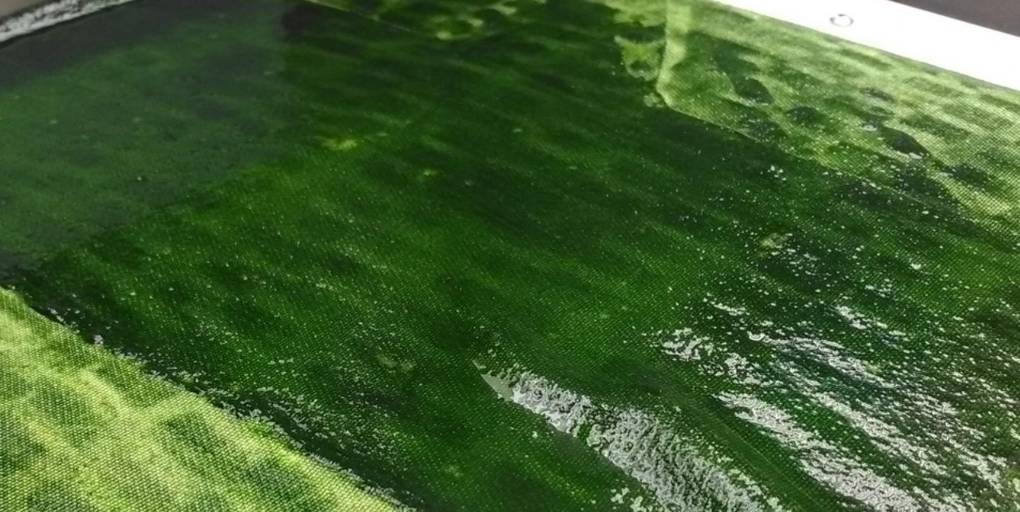
Feeding livestock requires an enormous amount of resources: hay, soya, fish meal… The problem is such that it is estimated that the majority of cultivated land is used to feed animals. One of the major challenges facing green agritech is to find more sustainable alternatives.
Inalve produces micro-algae for livestock feed.
According to their website, their solution is more efficient than conventional microalgae production systems, consuming 70% less water (??) and requiring 50% less energy; and than plant culture systems, requiring no pesticides, no GMOs and 60 times less land (at constant production?).
Press articles :
Iadys is a robotics start-up that creates robots to clean up aquatic areas, recovering waste from the surface and even hydrocarbons.
The company agreed to answer our questions.
What is the IADYS solution?
IADYS designs, develops and markets innovations at the crossroads of Artificial Intelligence and Robotics. The startup is committed to preserving the marine environment, notably with the Jellyfishbot: a small robot capable of collecting waste and hydrocarbons from the surface of the water. This robot is an effective and flexible solution for cleaning up aquatic areas that are more or less extensive and/or difficult to access, particularly in sheltered areas such as ports, marinas, lakes and canals, as well as leisure centers, hotel residences and industrial facilities.

What environmental challenges does IADYS address?
Every year, 8 to 13 million tonnes of additional plastic and 2.3 million tonnes of hydrocarbons end up in seas and oceans. There are an estimated 269 million tonnes of plastic in the oceans. In 2017, there were already 1 tonne of plastic for every 5 tonnes of fish, and if nothing is done, there will be more plastic than fish by 2050.
To this must be added the other forms of pollution now soiling our oceans (hydrocarbons, metals, green algae, etc.). Numerous regulatory measures have been adopted to prevent the discharge of waste into the environment. Despite these measures, an ever-increasing quantity of waste, carried by rain, wind or simply dumped through carelessness, ends up in rivers, lakes, seas and oceans. According to the United Nations Environment Programme, around 80% of marine pollution is land-based. It is therefore essential to concentrate pollution control efforts as close as possible to the source (i.e. ports, rivers, canals), because once waste or polluting substances are dispersed at sea, it is virtually impossible to recover and treat them.
What added value do you bring to your customers?
Local authorities are responsible for enforcing legislation banning the dumping of waste. Managers of ports, canals, leisure resorts, tourist sites, hotel residences and even industrial sites are required to implement the means for collecting and treating waste/pollution on their respective bodies of water.
These structures are often confronted with two types of pollution: macro-waste (plastics, glass, natural debris, etc.) and accidental oil pollution. Ports and canals are particularly affected by macro-waste and hydrocarbons.
In the water, macro-waste is carried by currents and winds, and is mostly concentrated in small areas (between boats, under docks, etc.).
At present, this type of waste is collected manually (using landing nets) or, much more rarely, using specialized boats. This method is still exhausting for the staff, and only allows waste to be collected in easily accessible areas. Waste collection often takes several hours to clean a few dozen square meters. The cost of this type of operation is therefore high, for an unsatisfactory end result. With the Jellyfishbot, it’s possible to clean 1000m²/h at 1 knot very easily, since it’s radio-controlled. Once the net is full, a hook allows it to be removed directly, without having to take the robot out of the water. What’s more, we’re working on an autonomous version of the robot that will be available in early 2021, which will further facilitate the work of the personnel involved.

Have you identified any competitors? If so, what are your competitive advantages?
Our main competitors are the Seabin, a solution that has been on the market for several years. It takes the form of a waste garbage can immersed in water, which sucks up all types of floating waste. An internal absorbent fabric about ten centimetres in diameter can absorb small quantities of hydrocarbons. However, the Seabin is fixed and has a capacity of 30L, compared with 80L per net with the Jellyfishbot. Our little robot is mobile, so it can target waste directly and clean an entire surface.
The “WasteShark” and “Recyclamer” solutions are two electric vehicles of similar size, with the capacity to collect floating waste. Their size and weight make them difficult to transport and launch. With respective weights of 39~kg and 90~kg, handling them on land requires several people, compared with 20kg for the Jellyfishbot, which can be handled by a single person. A launching cart is also available for complex configurations.
What’s currently preventing you from completely filling your market?
With the Covid-19 health crisis, the priorities of local authorities and private organizations were more focused on health. Today, the resulting economic situation makes it rather complicated for these structures to invest in new technologies in the ecology sector. Since then, IADYS has been working hard to raise public awareness of water pollution issues, and to develop the reputation of the Jellyfishbot so that it becomes indispensable for any organization owning a body of water subject to the accumulation of waste or hydrocarbons.
Hysilabs is a start-up developing a process for transporting hydrogen in liquid form, which would solve one of hydrogen’s main problems: transportation and storage.
One of hydrogen’s biggest problems is storage. Under “normal” conditions, 1kg of hydrogen takes up 11,000 liters… What’s more, dihydrogen is the smallest molecule AND is highly corrosive to steel. In short, an infernal headache.
Currently, to transport it, we mainly use compression (350-700 bars for hydrogen mobility) which consumes a lot of energy (>10% of the energy potential of the hydrogen transported), requires very heavy specific tanks and carries risks. More rarely, we use liquefaction, which is denser, but must be maintained below -253°C and consumes a great deal of energy (>20%). These difficulties make it imperative to develop alternatives.
Hysilabs technology
Founded by Pierre-Emmanuel Casanova and Vincent Lôme in 2015 in Aix-en-Provence, HySiLabs proposes to store hydrogen in a silicon solution (named “HydroSil) in the form of hydrides. Unlike McPhy and the designers of Powerpaste, HySiLabs has chosen silicon hydrides rather than magnesium hydrides.
This process would be
- Carbon-free
- Environmentally harmless (as opposed to ammonia NH3)
- stable, able to hold hydrogen for several days or months and be reused a lot.
Their competitors would be Hydrogenious and Chiyoda, but the vector proposed by the latter would be carbon-based and toxic (Source: Les Echos, to be verified).
HydroSil could transport 8.7% of its mass in hydrogen. A truck could therefore carry 7 times more H2 than a high-pressure hydrogen truck at 200 bars.
History and financing
The company raised €2 million and was the winner of the EDF Pulse prize in the Smart City category in 2018. It has also reportedly received €4 million from the European Commissions. Anticipating a larger round, it planned to set up a plant in Fos in 2020. This fund-raising still seems to be in progress, scheduled for 2022. They plan to register Hydrosyl with REACH in 2023 and use it for the first time (to power a hydrogen boat) in 2024.(Source)
To find out more, read our article on hydrogen storage.
Hyseas Energy is a startup developing hydrogen fuel cells for boats resistant to the specific conditions of marine transport (the risk of salt corrosion in particular).
The company was founded in Cannes in 2015 by Arnaud Vasquez, a former captain and chief engineer in the French Navy. Since 2016, in partnership with the association des Bateliers de la Côte d’Azur, it has been developing the“Telo Martius” project, a ferry operating in the Bay of Toulon. It should be operational in 2022, departing from Toulon, La Seyne, Saint-Mandrier and La Londe to visit the Îles d’Or d’Hyères. The hydrogen-powered boat is expected to be 26 meters long, accommodate 200 passengers and carry 240kW of fuel cells powered by 260kg of hydrogen.
In addition to the two partners (Hyseas Energy and Bateliers de la Côte d’Azur), the project is also part of the Hynovar project, supported by the CCI du Var, Engie Cofely H2 France and Excelis SAS. Hynovar is said to have won an ADEME call for projects. Deployment was scheduled for 2020-2021, and the aid was to amount to 6.45 million euros out of an 18.67 million euro project, but I have no post-2019 information on this subject.
DNV-GL, a classification company specializing in industrial and maritime risk assessment, is said to have chosen the Telo Martius as a case study for developing “good practices” to be followed by ships with low-carbon propulsion (source: startup website)
Hyseas Energy SAS has been registered since November 5, 2015 (RCS Cannes B 814697215), with NAF code 7219Z (Research and development in other physical and natural sciences). The company is domiciled at 5 avenue Montrose in Cannes.
Not to be confused with HySeas III, a European project
HySeas III is a hydrogen ferry project supported by the European Union’s “Horizon 2020” program, which has brought together Ballard (fuel cell), McPhy (refueling infrastructure), Kongsberg Maritime and other organizations, all coordinated by the Scottish University of St.Andrews. It is due to operate in the north of Scotland, between Kirkwall and Shapinsay, in the Orknay Islands. The project began in 2013, and the vessel will be the conclusion of the 3rd phase (hence the name “HySeas III”).