
Tryon is a French start-up offering a small-scale methanization system for more local organic waste recovery.
Jimmy Colomies, one of the founders, agreed to answer a few of our questions. Many thanks to him \o/

What environmental issues does Tryon address?
Bio-waste (food scraps) represents the equivalent of 1/3 of our household and professional waste production, i.e. around 20 Mt/year. This waste is made up of 80% water and organic matter from agricultural production. Yet it is still massively collected with the rest of the household waste and transported to destruction sites by landfill or incineration, which in their case makes no economic, environmental or social sense.
However, two regulations exist to remedy this situation:
- Grenelle 2 de l’Environnement has imposed since 2016 a selective sorting with a view to recovery for all professional players producing more than 10t/year.
- The Loi Transition Énergétique (Energy Transition Law) makes this obligation mandatory for all players by January1, 2024, including private individuals, under the responsibility of the public authorities.
Current recovery solutions tend to be “large-scale” solutions, which are suited to large producers (farmers, agri-food manufacturers…) whose waste is localized and massified, but less so to the newly concerned small producers who are spread across the whole territory. This requires long-distance collection, which is costly and has a high impact.
What does Tryon offer?
Our solution is a standard, modular unit for small-scale methanization of biowaste, with the aim of recovering it locally and reducing the associated collection logistics. The solution can reduce collection costs by up to 50% for a similar treatment cost.

What added value do you bring to your customers?
In addition to the main economic added value, the advantages of our solution for both private and public waste operators (waste syndicates, municipalities, agglomerations, etc.) are ..:
- Simplicity and speed: with prefabricated units requiring little work (simple slab) and installed in 1 year instead of 4 to 8 years for conventional “large-scale” units.
- Customizable and scalable: the standard, modular nature of the system means that the desired functionalities can be selected, and processing capacity can be scaled up over time in line with local needs in response to the introduction of selective sorting, from 1,000 to 8,000 t/year.
- Enhanced acceptability: with a design that reduces or eliminates all potential nuisances (visual, traffic, odors, risks, etc.)
- Turnkey: with a complete offer from project development to financing, operation and maintenance.
Have you identified any competitors? If so, what are your competitive advantages?
There are two main competitors today, the English SEAB and the French Bee&Co, who offer solutions on a smaller scale. The competitive advantage of our solution is twofold:
- A scale that enables us to provide all the essential functionalities, with a more attractive business model that meets the needs of all the players in a given territory
- A turnkey solution
What is currently preventing you from fully occupying your market?
First and foremost, we need visibility, especially with local authorities who are not necessarily familiar with this new scale. To this end, we are in the process of deploying an initial reference system in the Yvelines department, which will manage the bio-waste of the department’s 116 secondary schools, in order to demonstrate the benefits of the circular scheme and the business model, the technical aspects of which have already been validated on various prototypes.
Here are a few articles about them:
- Micro methanization expert Tryon gets off the ground, on Les Echos capital – Finance
Deforestation highlights a problem: we’re running out of room to grow crops. In addition, to limit transport, we need to produce food close to where it is consumed.
Soilless agriculture is the answer to both these problems. On the one hand, it “creates” an agricultural surface, and on the other, it is particularly compatible with cities, notably by enabling vertical farms. The most interesting growing system for this purpose is called hydroponics: growing with water.

A variant of this system is to combine it with a fish farm: the fish’s excrement feeds the plants. Pure circular economy!

This is where Urban Leaf comes in. The company’s founder, Marie Fiers, agreed to talk to us about her company.
What is Urban Leaf?
UrbanLeaf is a design office specializing in aquaponics, which designs, installs, operates and maintains aquaponic systems. A natural process modelled on the functioning of a pond, aquaponics was already used by the Aztecs several centuries ago. It enables the cultivation of fruit, vegetables, herbs and flowers, as well as fish, both edible and non-edible. UrbanLeaf proposes to recreate this autonomous ecosystem, watering and fertilizing plants with the nutrients present in the fish’s water.
Thanks to a microbiological process, the plants act as a natural filter for the water, which is then returned to the aquarium clean.
By setting up these systems, Urbanleaf aims to recreate a social link, get consumers involved and raise awareness of the need to protect the environment.
What environmental issues does Urban Leaf address?
Urbanleaf helps to reduce greenhouse gas emissions by offering local production solutions that do not emit CO2 when transporting foodstuffs.
Urbanleaf recreates autonomous ecosystems where plants are watered and fertilized with nutrient-enriched fish water, and the fish water is filtered by the plants. This production method promotes biodiversity in the city, produced without the use of synthetic fertilizers or pesticides.
Aquaponics produces high yields of fruit, vegetables and fish to feed urban populations, saving 90% water compared with conventional market gardening systems thanks to a recirculating circuit design.
Through aquaponics, vegetation provides numerous ecological services, particularly in cities: air pollution control, reduction of heat islands and enhancement of neglected urban spaces.
What added value do you bring to your customers?
UrbanLeaf is developing several products in different fields of action:
- Well-being and social cohesion. Gardening, in contact with water, fish and plants, is a soothing and relaxing activity. According to scientific studies, contact with plants and fish reduces stress, boosts productivity, improves well-being and reduces oral, dermatological and neuropsychological symptoms. An aquaponics vegetable garden within a company will encourage exchanges within teams, reduce stress and improve efficiency at work.
- Teaching. Learning about aquaponics, what an ecosystem is and the importance of preserving the planet’s natural resources is a must for young and old alike. UrbanLeaf organizes workshops and conferences to make learning fun, and to inform people about simple actions they can take to protect the planet. A mini aquaponics system set up in a classroom or schoolyard is a great way to learn by doing and encourage personal development.
- Production. We work with professionals to design commercial aquaponics systems that combine market gardening and aquaculture in an efficient and innovative way. Whether on the ground or on the roof, a wide range of installations are possible to make the most of surface areas that cannot be exploited by conventional processes.
Have you identified any competitors? If so, what are your competitive advantages?
Aquaponics represents an emerging market where competition is starting to appear.
Founded by Marie Fiers in 2015, Urbanleaf benefits from almost 5 years’ experience in aquaponics and a multidisciplinary team of PhDs and engineers in agronomy, aquaculturist technicians, specialists in their discipline and masters of production techniques.
Most of Urbanleaf’s competitors market a particular type of aquaponics system, or cater for a single target customer base. UrbanLeaf’s advantage lies in its adaptability, in its ability to create different systems according to customer needs. Its competitive edge lies in its ability to respond to any type of request with customized creations. UrbanLeaf is also the designer of Symbiums. The smallest aquaponics system on the market, made in France, highly ergonomic and ideal for installation in small spaces.
What’s stopping you from completely filling your market at the moment?
Urban agriculture, and aquaponics in particular, are still little-known techniques and therefore not very widespread, despite growing demand and their ecological benefits. There’s still a lot of controversy in the agricultural sector about “soil-less” cultivation, despite the fact that these are alternative, modular techniques. Growing interest from local authorities and the launch of national calls for projects are helping to raise awareness of this technique and develop our activities. UrbanLeaf is also a member of AFAUP, the “Association Française de l’Agriculture Urbaine Professionnelle” (French Association of Professional Urban Agriculture), whose aim is to federate urban agriculture professionals and create links between them and local authorities, the general public, the agricultural world and public authorities throughout France. Membership of AFAUP gives UrbanLeaf access to a vast network of urban farmers, a monitoring service for calls for projects, access to pre-negotiated contracts with a panel of suppliers and greater visibility. AFAUP is a real showcase for urban agriculture, enabling UrbanLeaf to increase its visibility.
Woodoo is a French start-up that has designed a process that makes wood rot-proof and much more resistant to fire and stress.
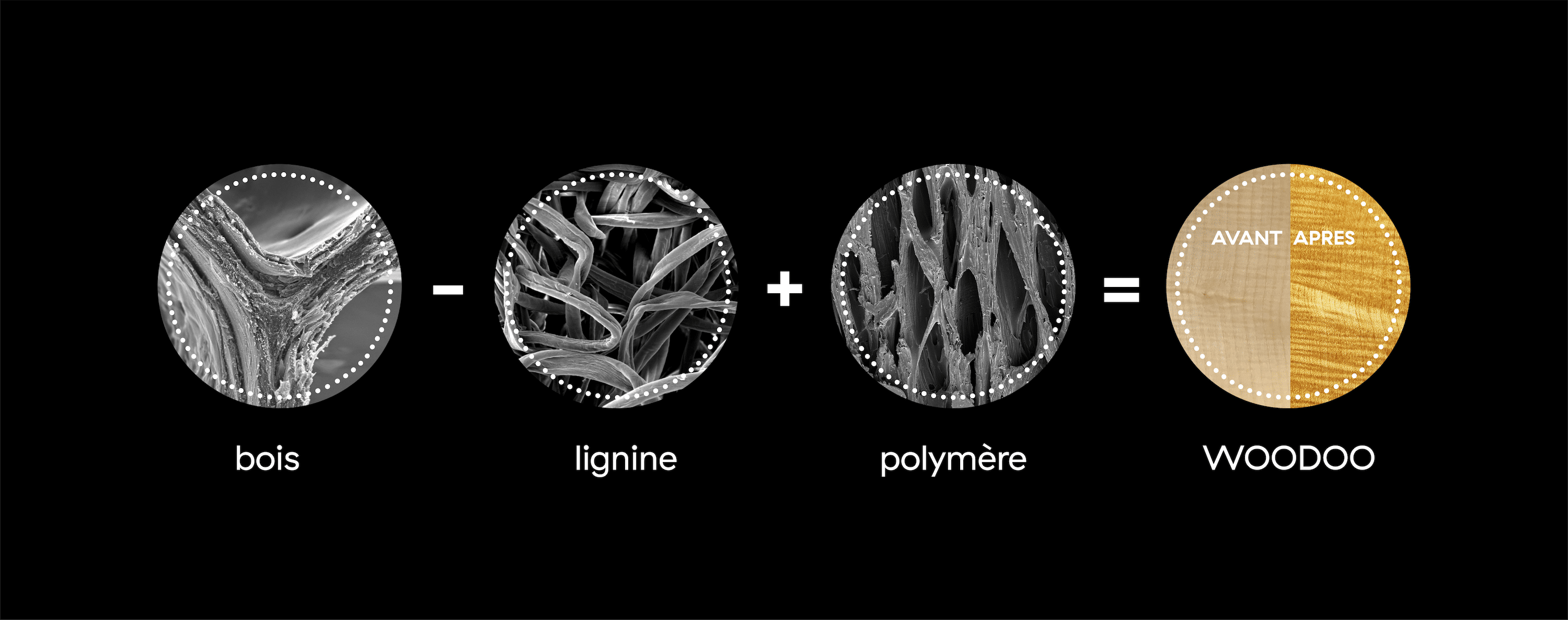
Wood is an environmentalist’s dream material: natural, it grows by itself, captures CO2, is easy to work with, and can be used to make an infinite variety of objects, from forks to entire houses… Unfortunately, it has some serious drawbacks: it’s prone to rot, flammable, not very strong… some woods are so brittle that they can only be used to make paper pulp.
Woodoo, a greentech start-up, proposes a technology that makes wood resistant to fire, rot and stress.
The Woodoo process
By removing the lignin from wood and replacing it with a plant-based resin, the process transforms any wood into a translucent, waterproof, rot-resistant, dimensionally stable, flame-retardant, tactilely conductive material that is almost as strong as metal. It can be used as a tactile display surface, like a screen.
Woodoo founder Timothee Boitouzet, an architect by training, has his sights set on architecture and construction. However, in order to be used in the building industry, it is necessary to obtain several ATEX certifications depending on the applications sought (a process similar to the Autorisation de Mise sur le Marché for medicines and phytosanitary products).
At present, the company is “at the development stage, and we are producing pre-industrial prototypes for sectors that have approached us and for which certification is not required. For example, for the luxury goods, design, automotive and interior design sectors.”(Batiadvisor) The main applications, however, are this “luxury material” aspect and the possibility of turning it into a kind of touch screen. They also plan to replace plastic for everyday objects. In particular, they presented a 4m² wooden video screen wall (“JASPR”) at CES Las Vegas in 2022. They are also proposing a luminous panel, LIGHTR.
An ecological material?
This augmented wood would be a very positive technology for the environment. The product would have a positive carbon footprint, storing 700kg of CO2 per m3 produced, compared with 400kg emitted, and it would be a less energy-intensive process than glass or steel production. This could represent savings of thousands of tonnes of CO2 per building. Being able to use lower-value, “weakly constituted” woods (poplar, pine, aspen, etc.) means that forests can be put to better use: 50% of the wood cut in France would not be used.
What’s more, the extracted lignin could be used as a substitute for petroleum in many products, adding to the environmental and economic value of the project. This material could revolutionize many sectors, including construction and furniture. For the time being, Woodoo is concentrating on high value-added niche markets, such as the automotive industry.
Woodoo: a greentech start-up
Timothee boitouzet, an architect by training, is the founder of Woodoo. Created in 2016, the start-up has filed 17 patents around its process. Woodoo has raised €5.2M and is one of Europe’s most recognized start-ups, with over 30 awards since 2016. Notably, it won the EDF Pulse prize in the “Smart City” category in 2017 and the CNAM Grand Prix for Innovation.
The company is said to be self-financing at present, working with the automotive (Daimler/Mercedes) and aerospace (Safran) industries to make wooden touch screens(Korii)
The company’s headquarters would be at the top of the Montparnasse tower, and its factory near Troyes.
Structure(infogreffe file) :
- SAS WOODOO, 83 boulevard Saint-Michel, 75005 Paris, RCS Paris 822 373 551 00016
- Secondary establishment: 3 chemin des croix, 10430 ROSIERES-PRES-TROYES, RCS Troyes 822 373 551 00032
Transmutex is a Franco-Swiss startup, close to CERN, developing a very special “TMX-START” reactor: being subcritical, neutrons would be supplied by a particle gas pedal, which would transmute fertile fuel(thorium) into fissile fuel(uranium 233). These fast neutrons would also enable the transmutation of more problematic atoms (e.g. americium), radically limiting the amount of radioactive waste produced.
Transmutex technology: absolute safety?
The Transmutex reactor, known as“TMX-START” (Transmutex Subcritical Transmutation Accelerated Reactor with Thorium) is “subcritical”: there is no self-sustaining chain reaction. If the external supply of neutrons ceases, the reaction stops almost immediately: in 2ms according to Transmutex. How, one might ask, could an accident occur in this context?
But where do the electrons come from? This is the esoteric part of the project: they come from a particle gas pedal (an 800MeV – 5mA, 40x60m cyclotron, inspired by the MEGAPIE project)! As the protons approach the speed of light, they will collide with the metal targets inside, producing neutrons by “spallation”. Contrary to popular belief, this type of equipment is not uncommon: there are an estimated 30,000 particle gas pedals worldwide, mainly for medical purposes. In this case, the process is called “Accelerator Driven System” (ADS).
The fuel is thorium (fertile), which is transformed into uranium 233 (fissile) before fission. The neutrons would be “fast” (and not slow or thermal), enabling transmutation and drastically limiting the waste produced (on the order of a few kilos instead of tons), with a lifespan several thousand times shorter.(source) They could even transmute and use heavier atoms, such as plutonium, neptunium or americium. The coolant is a molten lead-bismuth alloy. The energy price (LCOE) is estimated at less than $70/MWh.(source)
The reactor is not strictly speaking a 4th-generation reactor, as it is not on the list, but it looks like it could be.
The reactor’s target power output is currently 100 MW.
Transmutex progress and financing
Transmutex was co-founded in 2019 by Franklin Servan-Schreiber (CEO) and Federico Carminati (CSO) in Geneva. The latter worked at CERN with Carlo Rubbia, who developed the idea behind START in the 90s. The project is advised by a number of top-level scientists, many of whom have worked at CERN.
Transmutex would be a partner not only of CERN, but also of
- argonne National Laboratory, for fuel and coolant aspects
- eNEA, for cyclotron targets and core design
- institut Paul Scherrer, for the cyclotron and target
- TheCzech CVR Institute for experimental validation
- Alcen, which designed the hot cell circuits for Astrid, for robotization and hot cells
They would have developed advanced digital tools to model and simulate their system.
A first round of funding(15 million Swiss francs according to the video) was closed in November 2021 with venture capital fund UVC.
The 300MW pilot plant is valued at 2 billion Swiss francs (~€). They hope to design it before 2030.
FAQ
Where is Transmutex headquartered?
Transmutex is based in Geneva, Switzerland.
How does transmutation help treat nuclear waste?
Fast neutron bombardment can transform long-lived, high-intensity radionuclides into shorter-lived, less radioactive atoms.
Tiamat is a French startup developing sodium batteries. Created in 2017, it exploits work by the CEA and CNRS begun in 2012.
Tiamat technology: sodium-ion batteries
With lithium supplies under stress, more and more manufacturers are looking for alternatives to lithium-ion batteries for electricity storage. Sodium-ion batteries could be a viable substitute: not only is sodium a very common material, but these batteries would also have higher charge/discharge speeds than their competitors.(summary)
At present, the company seems to be focusing on supplying small batteries to manufacturers of hybrid cars. These would be more powerful and faster to recharge than lithium-ion batteries, which would be important for certain applications, notably acceleration assistance. In particular, it has partnered with:
- BMS PowerSafe and Neogy (Startec Group), to develop sodium-ion batteries in the “industrial design of electronic and energy storage solutions”.(source)
- Plastic Omnium to equip its hybrid cars.
History and financing of Tiamat
The research leading up to the Tiamat project began in 2012, with the creation of a “task force” between CEA, CNRS (Réseau sur le stockage électrochimique de l’énergie, RS2E) and Collège de France. The first 18650 sodium batteries (the model used I assume?) were produced by the scientists. In 2017, Tiamat won a national innovation competition, i-Lab, and the company was set up in Amiens. The founders are an entrepreneur, researchers from RS2E and CNRS Innovation.
It raises €1.6M in 2018 from Picardie Investissement and Finovam. After completing the first POCs (Proof of Concept) in 2019, in 2020 €3.5M is raised from historical investors and various local players.
Highlights:
- In 2019, the French President is said to have started up a bus using a Tiamat battery.
- Partnership with Startec Group announced: https://bmspowersafe.com/fr/actualites/tiamat-choisi-bms-powersafe-pour-la-conception-de-ses-batteries-sodium-ion/
Terrapower is an American company developing molten-salt fast neutron reactors. Founded in 2006 by Bill Gates, it is developing several technologies and is designing a prototype reactor to be marketed in 2028.
Reactor technologies
Terrapower is developing three main technologies:
- Travelling-wave reactors, focused on fuel and waste utilization efficiency and the possibility of recovering uranium 238.
- MCFR molten-salt reactors, with a planned capacity of 1,200 MWe, in partnership with Southern Company.
- Smaller “natrium reactors” (375MWe), in partnership with General Electric Hitachi Nuclear Energy
Overall, all these technologies are based on the use of molten salts and passive safety systems, making them highly secure.
Travelling-wave reactors
TheTraveling Wave Reactor (TWR) is a sodium-cooled fast reactor designed to use uranium-238 as fuel. The core contains enriched uranium, which initiates the reaction. Around it, depleted or natural uranium is used as a fuel through over-breeding. The chain reaction will form a sort of concentric wave, converting U238 into plutonium, hence the name “travelling wave reactor”. The reactor will be capable of automatically moving fuel rods to sustain the reaction.
The reactor would also be highly secure, relying on passive systems to cool itself, not requiring operator intervention. What’s more, spent fuel could be stored inside the core. It can operate for a very long time without needing to be refueled.
MCFR molten-salt reactor
Terrapower is working withSouthern Company on the feasibility of a moltenchloride fast reactor (MCFR) prototype.
Natrium-cooled fast reactors
Terrapower is working with General Electric Hitachi Nuclear Energy to develop a 345MWe natrium-cooled reactor combined with molten-salt storage capable of storing around 1GWh, enabling the plant to produce 500MWe for 5.5 hours if required. It operates at ambient pressure, with the reactor operating at 350°C. Various passive cooling logics, using gravity and natural convection, guarantee its safety. On the downside, the technology uses high-assay, low-enriched uranium (HALEU) fuel (5-20% uranium 235).
Sodium has several advantages: its boiling point is extremely high, enabling the reactor to operate at normal pressure; it transmits heat extremely well (3* better than stainless steel), enabling a dense installation; it does not corrode its environment. The reactor does use water, however, notably to cool the steam created during electricity generation (as with current power plants, I suppose).
The company predicts production costs of between $2800 and $3000/KW, and an electricity price (LCOE) of around $50-60/MWh. A power plant should cost around a billion dollars.
Financing and news
One of the company’s special features is the involvement of Bill Gates, as founder, investor and Chairman of the Board.
Arcelor Mittal, developing processes to reduce the carbon footprint of steel production, invested €25 million in November 2022 through its XCarb innovation fund.
Advances in MCFR technology
In 2016, the DOE awarded a $45 million grant for the development of the MCFR reactor, including the development of a test facility (“Integrated Effects Test”) to better understand operation, including molten salt thermodynamics.
In February 2022, Terrapower and Southern Company signed an agreement to design and operate a prototype using uranium chloride incorporated in molten salts as fuel. This is scheduled for the early 2030s.
Advances in the sodium “natrium reactor
The natrium reactor seems to be the company’s main focus.
A demonstrator is to be built at a former coal-fired power station in Kemmerer, Wyoming (USA). The construction permit should be submitted to the NRC in 2023, and the operating license in 2026.
In addition to Terrapower and GE Hitachi Nuclear Energy, the project involves several national laboratories (Idaho, Argonne, Los Alamos, Oak Ridge, Pacifi Northwest) and universities (North Carolina, Oregon, Wisconsin), as well as other entities (PacifiCorp, Energy Northwest, Duke Energy Carolinas, American Centrifuge Operating, Global Nuclear Fuels Americas and Orano Federal Services). The facility is scheduled for completion in 2028, making it one of the first commercially available advanced reactors.
The project is 50% funded by the U.S. Department of Energy (DOE) up to a total of $2 billion. The operating plant would require between 200 and 250 people.
FAQ
What does TerraPower do?
TerraPower develops innovative, safe and low-carbon nuclear power generation systems.
What role does Bill Gates play in TerraPower?
Bill Gates is the founder and chairman of TerraPower.
Is TerraPower listed on the stock exchange?
No, TerraPower is still a non-public company.
Will TerraPower technology use uranium?
Yes. Its first technology, the traveling-wave reactor, should be able to run on uranium 238. The most advanced, its natrium reactor, will run on highly enriched uranium (5-20% U235), HALEU (“high-assay, low-enriched uranium”).
How many people does TerraPower employ?
TerraPower has 184 employees (November 2022).
Sylfen is a startup developing a building-scale energy production solution. They generate electricity from solar panels and store the excess in the form of dihydrogen , which is then converted back into electricity by a reversible electrolyzer. Heat is produced during both operations.
Sylfen’s ambition: decarbonizing building energy
Sylfen’s project is based on a process for producing and storing intermittent electricity, and software for combining this process with the building’s electricity consumption and other sources of supply.
The process
The heart of the project is the reversible solid oxide electrolyzer technology developed by the CEA (probably a different one from the one Genvia is industrializing?). They call it the “RSOC energy processor”, RSOC for Reversible Solid Oxide Cells. Sylfen’s added value lies above all in the software solution that will be used to optimize the supply of multi-source energy with a smart building logic.
Sylfen’s ambition is to use hydrogen to decarbonize energy consumption in buildings:
- Electricity would be generated by solar panels on the roof.
- This electricity would be converted by high-temperature electrolysis into hydrogen, which would be stored, and heat, which would be used to heat the offices.
- As the device can also be used as a fuel cell, the stored hydrogen can then be converted back into electricity (and heat) when needed.
In this way, the supply of electricity from solar panels would be smoothed out: intermittency would be managed. What’s more, since we’re using aSOFC (Soft Oxide Fuel Cell), we can also use methane if there isn’t enough hydrogen.
A battery would also act as a buffer to limit power peaks, whether from solar panels or electricity consumption. Indeed, the electrolyzer/fuel cell has a certain inertia and limited power.
Overall, the startup claims a 50-75% reduction in CO2 emissions and “70-100%energy autonomy” for the building.
In terms of space, the RSOC modules would fit into a 1.2m x 2m high cabinet. The hydrogen tank would be located outside. (2) The system is called the Smart Energy Hub.
The importance of consulting
In 2020, consulting was one of the services offered by the company. (1) Even today, it’s at the heart of the service. In fact, the offer begins with a study of the building, its configuration, its consumption in detail “and integration into its local environment, to exploit possible synergies (parking, sharing of production or consumption, etc.)”. (https://sylfen.com/fr/offres/)
The eternal problem of intermittence
For anyone who has read the RTE report, the problem is obvious: is it profitable ? Indeed, the report tells us that the problem with using electrolysis to manage intermittency is that the electrolyser is under-utilized and, as a result, cannot cover its fixed costs. This raises the question of whether the electrolyser will operate sufficiently to be profitable. The answer may be that it’s also a fuel cell. But there’s already an electricity grid at the base… In short, we’d have to work out the equation, but we don’t have the figures.
The company’s added value is its software solution, but it gives little in the way of details of how it works. A case study would give us a better idea. Is there, for example, a fundamental difference with Panga? Does their technology carry a moat, a barrier that will protect them? Cogeneration is not really a specialty of the CEA alone. In Japan, it’s a widely used process with the ENE-Parc system: haven’t they already developed smart building applications like Sylfen’s?
Cogeneration technology is one of the most popular building technologies. Will Sylfen be the company to make it viable?
The Sylfen start-up
Sylfen was founded on June 5, 2015 in Grenoble by Nicolas BARDI and Caroline ROZAIN, joined in 2016 by Marc POTRON. The first demonstrator, named “SmartHyes”, for “Smart Hydrogen Energy System” was designed in May 2018 (3). In January 2018, the company joined the European Reflex project, coordinated by CEA-Liten, which aims to build a Smart Energy Hub with 3 modules, each with a power of up to 40kWe in electrolysis; to operate it for >8000h in 2020, on theEnvipark headquarters building; and to increase the power of the stacks to densify the system. (4)
The company produces its own electrolyzers on a 460m² industrial site in Le Cheylas (on the SLS Actiparc site), which it moved into in 2020 (5). The company targets businesses (offices, warehouses, large surface areas, etc.) and local authorities (administrations, gymnasiums, educational buildings, etc.).
In March 2022, the startup was awarded the Clean Tech Open prize by Thomas Lesueur, Commissioner General for Sustainable Development, on the premises of BPI France.
On May 10, 2022, Sylfen raised 10 million euros, bringing in Groupe IDEC, Supernova Invest, Elaïs Orium and Crédit Agricole Alpes Développement (C2AD) alongside its historical shareholders CEA Investissement and EIT InnoEnergy. The Idec Group comprises around twenty companies operating in the real estate sector.
It is registered at 266 Avenue de Savoie, 38 570 Le Cheylas, Grenoble, under Siren number 811828086. Its NAF code is 7112B – Engineering, technical studies.
Specific sources :
- (1) Sylfen’s move to BSmart, October 23, 2020, https://sylfen.com/fr/2020/10/23/passage-de-sylfen-sur-bsmart/
- (2) Tout comprendre sur Sylfen en 4′ chrono!, May 3, 2022, https://sylfen.com/fr/2022/05/03/tout-comprendre-sur-sylfen-en-424/
- (3) https://sylfen.com/fr/2018/05/22/avancees-techniques-majeures-avec-le-demonstrateur-smarthyes/
- (4) https://sylfen.com/fr/2018/05/22/le-projet-europeen-reflex/
- (5) https://sylfen.com/fr/2020/05/19/sylfen-change-d-echelle/
Trina Solar, founded in 1997 in China, is a manufacturer of solar panels and photovoltaic solutions. The company produces monocrystalline and polycrystalline solar cells and modules, using three innovative technologies in particular: PERC photovoltaic cells, bifacial panels and half-cells. Trina Solar is also involved in the design and construction of photovoltaic systems for the residential, commercial and industrial sectors. The company has a worldwide presence and ranks among the leading solar panel manufacturers in terms of production capacity.
Trina Solar products
Trina markets photovoltaic modules, optimization software and other customized devices and services. They can be found at the following link: https://www.trinasolar.com/us/resources/downloads .
Trina Solar solar panels
Trina Solar is a photovoltaic solar panel manufacturer offering monocrystalline photovoltaic solar panels using multi-busbar technology, enhancing aesthetics and performance. Some models use half-cut and/or bifacial technology. The S residential or Tallmax range is designed more for home use, while the N range is exclusively for photovoltaic power plants.
Here’s a sample (there are 2 or 3 times as many):
| Range | Model | P.(W) | Efficiency | NOCT | Coeff °C | (1) | (2) | (3) | (4) | (5) | Dimensions | Technos |
| Vertex S | TSM-DE09R.0 | 425 | 21,30% | 43 | 0,34 | 15 | 25 | 0,55 | 84,80% | Mono | 1,7×1,1 | Multi-busbar |
| Vertex S | TSM-DE19R | 580 | 21,50% | 43 | 0,34 | 12 | 25 | 0,55 | 84,80% | Mono | 2,38×1,13 | Multi-busbar Halfcut |
| Tallmax | TSM-DE15M(II) | 420 | 20,90% | 43 | 0,34 | 12 | 25 | 0,55 | 84,80% | Mono | 2,01×0,99 | Multi-busbar |
| Residential | TSM-DE06X.05(II) | 380 | 20,60% | 43 | 0,34 | 25 | 25 | 0,55 | 84,80% | Mono | 1,85×0,99 | Multi-busbar |
| Vertex | TSM-DEG19RC.20 | 575 | 21,30% | 43 | 0,34 | 12 | 30 | 0,45 | 84,95% | Bi | 2,38×1,13 | Multi-busbar |
| Vertex | TSM-DE21 | 670 | 21,60% | 43 | 0,34 | 12 | 25 | 0,55 | 84,80% | Mono | 2,38×1,3 | Multi-busbar |
| Vertex | TSM-DEG21C.2 | 665 | 21,40% | 43 | 0,34 | 12 | 30 | 0,45 | 84,95% | Bi | 2,38×1,3 | Multi-busbar |
| Vertex N | TSM-NEG19RC.20 | 590 | 21,80% | 43 | 0,30 | 12 | 30 | 0,4 | 87,40% | Bi | 2,38×1,13 | Multi-busbar |
They had marketed models with PERC technology (e.g. Vertex S TSM-DE09.08; Vertex TSM-DE14M), but they no longer seem to be promoted today.
Trina Solar optimization software and other devices
Solar panel systems include not only panels, but also inverters, for example. It’s also a good idea to use software to monitor and optimize their performance. Trina Solar offers
- several inverter formats (60kW, 125kW and 2500kW)
- Trackers to collect panel information and send it to software (e.g. Tracker Agile-1P and Vanguard)
- as well as optimization software, such as Trinapeak, Trinasmart or Trinaswitch.
Trina Solar services
They also offer customized services for large-scale installations. For example, dedicated support for installations on industrial and commercial buildings, from 250kW to 20MW.
Trina Solar milestones, financing and chronology
Founded in 1997 by Jifan Gao in Changzhou, China, Trina Solar has established itself as one of the world’s leading manufacturers of solar panels and integrated photovoltaic solutions. The company specializes in the production of solar modules, the supply of turnkey solar systems and the development of large-scale solar projects.
In 2006, Trina Solar was listed on the New York Stock Exchange (NYSE) under the symbol TSL, strengthening its position on international financial markets. However, in 2017, the company delisted from the NYSE to become a private company.
Over the years, Trina Solar has raised several rounds of financing to support its growth and expansion. In 2008, the company raised $158 million through an equity offering, followed by a further $100 million in 2010. In 2014, Trina Solar raised $115 million to finance the expansion of its production capacity and the development of solar projects abroad.
In 2016, Trina Solar reached an annual production capacity of 5.5 GW for solar modules, positioning itself among the world’s largest solar panel manufacturers. In the same year, the company unveiled its roadmap for 2020, aiming to produce 10 GW of solar modules per year and deploy 5 GW of solar projects.
In 2020, Trina Solar launched the Vertex solar module, a range of high-performance solar panels featuring monocrystalline solar cell technology and conversion efficiencies of up to 21%. In the same year, the company also passed the 10GW mark in annual solar module production capacity, in line with its strategic objectives.
It is said to have produced a total of 80GW of cumulative photovoltaic panel capacity, and to have more than 19,000 employees worldwide.
Digitization helps reduce resource consumption for the same production: better agricultural yields, more efficient machinery, optimal heating… It’s a greentech challenge for a more sustainable economy.
Panga offers a building management platform. This startup has the particularity of processing data locally, in line with the logic of Edge Computing. She agreed to answer our questions.
What environmental issues does Panga address ?

We are focused on two major environmental challenges: energy efficiency in buildings, and energy savings in our information systems.
- In France, the building sector is the biggest consumer of energy. It accounts for 40% of our energy bill, and is the second largest source of greenhouse gas emissions. Some studies show that after renovation, residents’ energy consumption habits change. Indeed, renovations lead to a reduction in charges, but also to an increase in consumption, which can cancel out the energy gains made. So, to better control energy costs, residents need to be informed and helped to better understand their consumption. Finally, building automation, and thermostat automation in particular, can reduce energy losses by 10 to 30%.
- Today, our buildings operate on a silo model, meaning that our data is transmitted over different networks (lighting, heating, ventilation, energy meters, video surveillance, intercom, etc.) which do not communicate with each other. The result is a multitude of redundant devices and complex data management. To overcome this, we need to pool our equipment (meters, BMS/CGT, intercom, tablet, etc.).
As citizens and residents of a building, we generate a great deal of data, which continues to grow exponentially with the development of Smart Buildings and Smart Cities.
All this data, which is generated and reused within the building, is processed and stored in external clouds, before returning to its point of origin. We must therefore seek to limit these transactions. It is estimated that data centers consume 1% of the world’s energy. Around 35% of this energy is invested in cooling systems, due to the heat generated by the concentration of computing servers.
Decentralizing these information systems would make it possible to have mechanical cooling systems that consume no energy. For example, the heat produced could be reused directly in homes in winter, reducing the energy bill for heating our buildings.
What solution does Panga offer?

Our solution aims to help residents consume better and less, by processing data locally. Thanks to a range of applications, we simplify access to data for building users and the city of tomorrow. These applications, chosen by the customer, are then made available on media supplied by us. These work like a smartphone operating system. Our solution is aimed at property developers and facility managers. We operate in the Smart Home, Smart Building and Smart City markets.
We design a modular, secure, multi-service network infrastructure for buildings, neighborhoods and cities, transforming them into service platforms and reducing communications infrastructure and costs. This system is called B-NOS (registered trademark and property of Panga SAS), and is built around IoT with an EDGE and Grid Computing approach, as well as the design of a BOS (Building Operating System).
What added value does Panga offer its customers?
Our solution enables better management of building-related data. It enables you to
- Be more responsive: Local processing makes it easier to analyze building energy consumption.
- Enhanced security: each entity has access only to its own data, with no access to those of other entities.
- Reduce communication costs and infrastructures: Limiting the movement of data not only reduces costs, but also enables infrastructures to communicate, as data is processed locally.
- Reduce carbon footprint: Reducing data processing in an external cloud reduces the distance over which data is transported, and therefore CO2 emissions. Optimizing data management also encourages more responsible energy consumption.
Have you identified any competitors? If so, what are your competitive advantages?
We have a few competitors in our market. However, we offer a more comprehensive solution. In fact, we’re able to adapt our solutions to suit different environments, developing them for both Smart Buildings and Smart Cities.
Our competitive edge is based on the Edge Computing concept and the design of a BOS (Building Operating System). In other words, we process data where it is produced. This technique enables us to avoid transmitting irrelevant data to a cloud.
In this way, we ensure greater fluidity and responsiveness in data processing. Thanks to this, we were able to register our B-NOS brand. What’s more, Panga is also positioned in the data market, so we have a wealth of knowledge in building data management.
What is currently preventing you from fully occupying your market?
Today, we lack visibility and awareness. However, we’re fortunate enough to be evolving at the same time as awareness of “better consumption”, which helps us a lot. Nonetheless, we’re looking for references to make our solution better known.
We are also in the process of developing our sales team. On the one hand, this will enable us to seize more opportunities to communicate about our solution. On the other hand, we’ll be able to reduce the time it takes to acquire customers. The lack of visibility is preventing us from industrializing our product and growing our business.
We also have the ambition to do well, so we’re working on numerous applications, which makes our development phase longer. What’s more, we’re involved in a number of projects that enable us to compensate for this lack of visibility. Currently, we’re taking part in projects such as TIGA (Territoire innovation grande ambition) with the La Rochelle conurbation for its “Territoire 0 carbone” project.
Ombrea offers modular photovoltaic systems for use on crops (“agrivoltaics”), enabling better adaptation to climatic hazards, which are set to worsen under the impact of climate change.
With climate disruption, extreme events such as drought and hail are set to become increasingly frequent. This was recently illustrated by the prolonged lack of rainfall on many farms in March and April 2020.
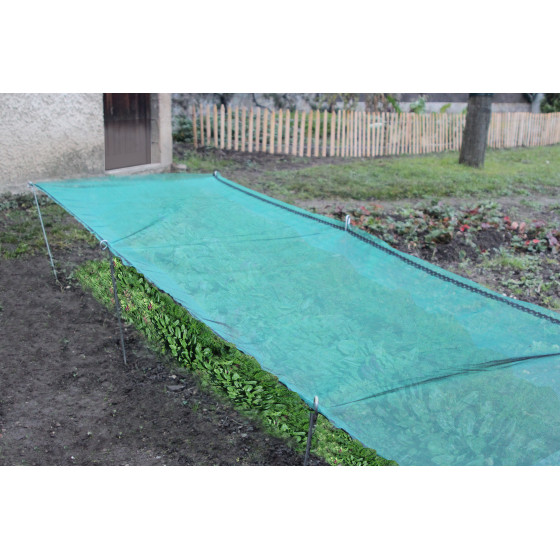
One solution, in the event of excessive heat or hail, is to use shade or anti-hail netting. However, this requires extra work, is difficult to manage in terms of manpower and is not flexible.
The Ombrea solution
Ombrea proposes a much more interesting solution: intelligent automated panels. Thanks to an army of sensors and increasingly sophisticated know-how, the machine would provide the plants with the shade they need, making them more resistant to the vagaries of the weather. As an option, the panels generate electricity using photovoltaic cells.
In this way, Ombrea improves plant yields and reduces the need for irrigation. According to the startup, their solution has increased yields by 63% for tomato plants and by 50% for a strawberry crop, and reduced water requirements by -43% for tomatoes. However, I haven’t found any scientific studies on the subject (this must vary, for example, according to the type of climatic event endured and its intensity).
One of the core features of the solution would be its artificial intelligence and its ability to process data to create an optimal microclimate for crops. This is a project in which R&D is central. The solution is mainly envisaged for high value-added crops, such as viticulture.
There are significant similarities with Sun’Agri, which seems to offer a very similar solution, but with panels that pivot rather than slide, and with a greater focus on electricity production.
It fits in with our Green Agritech category, and more specifically with precision agriculture.
Ombréa: identity and fundraising
Ombréa was founded in 2016 by Julie Davico-Pahin (CEO) and her father Christian Davico (President). It is located in Aix-en-provence (Provence, Alpes-côte d’Azur, France).
It raised 7 million euros in September 2021 from investors including Mirova (a management company affiliated to Natixis Investment Managers) and CMA CGM Ventures (the investment arm of the transport group of the same name). To this was added 3 million euros of “debt” (= borrowing?) from banks.
Persistent questions
I still have a number of questions that prevent me from seeing just how interesting the scheme is:
- What is the expected ROI (Return on Investment) for operators?
- What damage caused by extreme weather events could have been prevented by using Ombrea? For vineyards? This would give a good idea of the size of the market.
- Vineyards seem to be a natural customer for them: they’re fragile crops, with high added value and a huge market in France. What’s stopping their solution from being implemented in all the major French vineyards?
- Can anti-hail nets be installed automatically? If not, what is the added value compared with conventional anti-hail nets?
- What is the carbon impact of the infrastructure?
As always, if you have any criticisms (or feedbacks), I’d love to see them in comments or by mail 🙂
Some articles:
- Start-up Ombrea launches smart shades to respond to climatic hazards, Cnews 2018
- Ombrea: synergies between agriculture and photovoltaics are possible… in certain scenarios; Pv Magazine 2019
- Ombrea’s method for managing growth; La Tribune PACA 2019
- Agrinove in Nérac: Ombrea expands, La Dépèche 2019
Sunfire is a German company developing alkaline or solid oxide industrial electrolyzers producingpure hydrogen orsyngas. It has raised over 200 million euros.
Sunfire industrial electrolyzers
Sunfire offers three models ofelectrolyzer, with two technologies and two types of production: alkaline electrolysis and solid oxide electrolysis, the latter capable of producing dihydrogen or syngas.
Alkaline electrolysis: Sunfire-Hylink alkaline
The “Sunfire-Hylink alkaline” is an alkaline electrolyzer producing pure hydrogen. It can produce 2165Nm3/h, or 195kg/h of dihydrogen at 30 bar and 99.8% purity. It could produce between 25 and 100% capacity. Its power consumption is between 4.46 and 4.65kWh per Nm3 produced. It requires an ambient temperature of between 5 and 40°C.
Solid oxide electrolyzers
There are two models of solid oxide electrolyzer: one that produces pure hydrogen(Sunfire-Hylink SOEC) and the other syngas(Sunfire-Synlink SOEC). Both produce 750Nm3 per hour and use steam arriving at 150-200°C and 3.5-5.5 bar. They can operate from 5 to 100% capacity, with a “hot idle ramp time” of less than 10 minutes. They require an ambient temperature of between -20 and 40°C.
- Sunfire-Hylink SOEC produces dihydrogen from steam. Consumption is 3.6kWh/Nm3. The hydrogen produced is 99.99% pure.
- Sunfire-Synlink SOEC uses steam and CO2 to produce syngas composed of between 20% and 60% dihydrogen, which will be used to produce synthetic fuels (e-fuels) or chemicals. Its power output is 2.89MW.
Sunfire history and financing
History of Sunfire
Sunfire is a German startup founded in 2010 by Nils Aldag, Christian von Olshausen and Carl Berninghausen. The company grew by absorbing several other companies:
- Staxera GMBH, a solid oxide fuel cell production company in 2011.
- New Enerday GMBH, a fuel cell production company
- IHT, a 70-year-old producer of alkaline electrolyzers, in 2020
- Solingen branch of electroplating company MTV NT, in 2021
Sunfire began prototyping a solid oxide electrolyzer in 2012, a year after absorbing Staxera. The company opened a demonstrator plant for the production of e-fuels (= fuels produced from electricity) in 2014 and marketed its first generation of SOEC electrolyzers. It is participating in the German “Power-to-X” project, in its first (2016) and second (2019) phases. By 2020, Sunfire and 3 other companies (Climeworks, SMS group and Valinor) have agreed to set up an industrial-scale plant to convert electricity into e-fuels (“Power-to-liquids”): “Norsk E-Fuel. The company would employ 500 people in Germany and Switzerland.(source) On March 22, 2022, they announced that they would be supplying electrolyzers for a “Power-to-X” plant in Finland.
Sunfire’s financing rounds
Sunfire has raised funds on several occasions:
- It reportedly raised €6M on November 29, 2012 in a Series B round involving TotalEnergies Ventures, Electranova Capital and Bilfinger Venture Capital, among others.
- It reportedly raised €8M in 2014 in a Series B round involving TotalEnergies Ventures, Electranova Capital and Bilfinger Venture Capital.
- It would have raised a Series C round on November 23, 2015 involving TotalEnergies Ventures, Electranova Capital and Inven Capital; then a second Series C (?) round, announced on January 7, 2019, in which it would have raised €25M.
- Neste reportedly invested in Sunfire on March 6, 2020. The two companies appear to cooperate directly thereafter.
- It raised €109M on October 18, 2021 in a Series D round led by Lightrock as well as Planet First Partners and bringing Carbon Direct Capital Management and HydrogenOne Capital.
- It raised €86M on May 24, 2022 in a Series D2 round involving Copenhagen Infrastructure Partners (CIP) and Blue Earth Capital.
FAQ
How much money has Sunfire raised?
Sunfire has raised a total of €234 million.
What does “Power-to-X” mean?
“Power-to-X” refers to projects that transform electricity into something else. This can be gas, such as hydrogen, or liquid. The process is generally based on electrolysis.
Sterblue offers a smart maintenance solution for electrical infrastructures.
CEO Geoffrey Vancassel kindly agreed to answer our questions.

What environmental challenges does Sterblue address?
Through more effective monitoring of critical assets such as power grids or wind turbines, we help reduce risks by anticipating potential damage. For example, a faulty electrical insulator fastener on a distribution network can lead to a downed line and serious damage to property, people and the environment. The 2018 California wildfires started by PG&E released 15% of all California’s annual CO2 emissions.
What solution does Sterblue offer?
Sterblue develops the central infrastructure inspection platform. We have three major components to our solution. Firstly, we build the tools to easily capture quality data, starting with drones and offering our automatic 3d navigation software around complex infrastructures.
Then we organized the data into a single model, enabling us to work with multiple customers and, above all, to train our artificial intelligence in a scalable way, without cumbersome and time-consuming re-training for each new customer and type of infrastructure. Finally, thanks to this structured data model, we are able to offer a wide range of analytics and reporting to our customers.
What added value does Sterblue offer its customers?
Deployability and modularity are key concepts in our value proposition. We offer a purely software-based offering, enabling automatic flight with off-the-shelf drones and the Sterblue mobile app. Our competitors design their own drones with a large number of specific sensors. This means we can deploy a customer anywhere in the world in a matter of minutes, and access to data processing is also greatly facilitated. The latest customer to be deployed was in … Japan from … France!
The second aspect is the modularity of our solution. Our customers, although managing similar infrastructures, have extremely variable work processes, which can make it extremely complex to take these multiple requirements into account. Within our product, we have taken care to build multiple, easily configurable business “blocks” to meet this need.
And of course, artificial intelligence permeates all the different stages of our platform, enabling us to save a minimum of 25 to 30% time throughout the entire inspection and asset management process (defect & equipment detection, precise defect location, image sorting, etc.). ).
Have you identified any competitors? If so, what are your competitive advantages?
Our competitors today are mainly focused on hardware and software. Today, we have a software-only approach that enables us to offer very high levels of deployability and modularity. This also enables us to be very well connected within an ecosystem of other key asset management solutions (ESRI, SAP, etc.)
What is currently preventing Sterblue from fully occupying its market?
With the exception of a few advanced energy companies, the market is gradually beginning to see the benefits of integrated software solutions to better manage their assets. The education we’ve been providing over the past three years with business cases built up with a few major customers is starting to bear fruit. We’re seeing a marked increase in such initiatives around the world. Sterblue now operates in 16 countries on 4 continents.
FAQ
What is Sterblue’s innovation?
Sterblue is developing a central infrastructure inspection platform. They use drones to obtain data and then make it usable for stakeholders.
How much money has Sterblue raised?
Sterblue has raised $2.1 million.
Solid Power is a Colorado-based startup developing solid-state batteries, founded in 2011. Their lithium-ion batteries are said to be safer, more reliable at high temperatures, more powerful and less expensive than their non-solid-electrolyte equivalents.
Solid Power solid electrolyte and its batteries
Today’s electrolytes are liquid and, in the case of the main batteries, flammable, leading to safety risks. A solid electrolyte would not only be safer, but would also theoretically deliver higher performance. This is one of the key areas of research in the battery sector.
Solid Power has developed a sulfide-based solid electrolyte and batteries based on it. Batteries would be safer, more reliable at high temperatures, more powerful and less expensive. They report having carried out a number of tests, including nail penetration, overcharging and short-circuiting. No ignition or rupture of the tested cell was observed.(source)
The company markets several types of battery based on its solid electrolyte:
- A cell with a silicone anode and an NMC cathode.
- A more conventional cell with a lithium anode and an NMC cathode.
- A cell with a lithium anode and an original “conversion type” cathode, which would be particularly inexpensive and have a high specific energy.
In 2020, they announced that they had produced 20Ah batteries with a capacity of 330Wh/kg. They could operate from -10°C to 70°C and charge to 50% in 15 minutes at ambient temperatures.
Solid Power history and financing
Solid Power is a spin-off from the University of Colorado Boulder, founded in 2011 by Doug Campbell, Conrad Stoldt and Sehee Lee with funding from DARPA. In 2013, they received a $4.5 million grant from ARPA-E, then, in 2014, signed a $2.9 million contract to develop battery technology. In 2017, they sign a partnership with BMW to develop solid-state batteries for electric vehicles. The first round of financing takes place in 2018
A pilot plant becomes operational in 2019, in Louisville, Colorado (USA). In 2020, batteries with a storage capacity of 320Wh/kg are produced. The following year, Solid Power raises a spectacular $135 million from a group of investors led by BMW Group, Ford Motor Compatny and Volta Energy Technologies. A second plant is announced shortly afterwards in Thornton, Colorado, to produce 30 tonnes of solid electrolytes.
Solid Power goes public on the NASDAQ stock exchange on December 9, 2021, merging with Decarbonization Plus Acquisition Corporation III. The company is currently managed by Dave Jansen.
FAQ
Who is Solid Power’s CEO?
Solid Power’s CEO (Chief Executive Officer) since 2022 has been David B. Jansen. He is assisted by Kevin A Paprzycki (CFO), Joshua R.Buettner-Garette (CTO) and Derek C. Johnson (COO).
How much has Solid Power raised?
Solid Power has raised a total of 381.6 million euros.
What technology does Solid Power develop?
Solid Power develops solid electrolyte batteries.
- The blog: https://www.solidpowerbattery.com/blog/
- An interesting article from 2021: https://www.largus.fr/actualite-automobile/batteries-solides-bmw-et-ford-investissent-dans-solid-power-10610399.html
SEDIPEC is a French start-up developing connected flood protection systems to protect all openings (doors, windows, bay windows, air vents, garages, etc.) in the home against flooding.
Jonathan Flahaut, co-founder of the project, agreed to answer our questions.
What environmental issues does Sedipec address?
Our mission is to reduce the amount of damage caused by flooding in France every year, while helping to design the resilient housing of tomorrow.
1. Flooding is one of the world’s major natural hazards, and the most damaging natural disaster. (40% of the French territory is affected, 1 billion damage per year)
2. Despite numerous recommendations (cofferdams, sandbags, inflatable cushions, etc.), water continues to enter homes, mainly through doors and garages.
3. When a runoff warning is given, residents have very little time (often 15 minutes) to react, and current protection does not allow them to be reactive to the risk.
Facts and figures :
- 40% of French territory is flood-prone
- 7 MILLION PEOPLE living in flood-prone areas
- 3.7 MILLION DWELLINGS affected
- 2 BILLION euros worth of damage per year
- 17 MILLION PEOPLE directly or indirectly affected by flooding in France every year
What solution does Sedipec offer?
When I explained my project to the Nice Metropolitan Council, one of the people in charge told me that their main problem was still flash floods, the effects of run-off. These are downpours of water that fall and slide over concrete, rapidly reaching downstream neighborhoods. The exposed populations have only 15 minutes to protect themselves.
I asked what preventive measures they were taking in the face of this risk, and one of the people in charge told me that they were sending an SMS push message to the owners of property exposed to the risk.
At that very moment, something clicked. I said to myself that if we were able to alert owners in good time by SMS, then we’d also be able to send this signal to my protection systems.
The idea of fire doors came to mind, and on the same principle, when the intelligent cameras placed upstream on the bridges and mountains detect a critical water level, they can also send a signal to my protections so that it engages before the danger arrives.
So we’ve rethought the swing shutter, giving it additional, complementary functions to protect people and property against flooding. These hermetically sealed shutters can be connected to the local warning system to provide permanent, autonomous protection. We have named this product INOLOCK (Ino = Goddess of the shipwrecked and Lock = locking).
We are also collaborating with OGOXE (also a GreenTech label holder) to connect our solution to their river monitoring system. The complementary nature of our respective services will give rise to fully autonomous protection systems that anticipate danger and prevent water from entering homes.

What added value do you bring to your customers?
We offer permanent, autonomous protection systems to anticipate danger and plan the best way to evacuate occupants. With our devices, we can protect a house in a matter of seconds.
Have you identified any competitors? If so, what are your competitive advantages?
Direct
We have 2 direct competitors in operation:
- Torbau Schwaben GmbH : This is a German industrial company offering innovative doors and gates. The company has developed 2 anti-flood solutions under the Aqualock brand: garage doors and entrance doors.
- Esthifrance : This is a reseller of German products, offering a wide range of anti-flood products to suit all situations
Indirects :
Our devices are multifunctional and hybrid, which means we have many indirect competitors.
The cofferdam has been THE recommended solution for reducing the vulnerability of buildings in France since its creation in 2003.
A cofferdam is a partition fixed in front of the house’s openings, preventing water from passing through up to 1 m high.
The main problem is that this device is not smooth on the wall, and is therefore easily torn off during a flood.
What’s more, this mechanism requires recurrent annual installation, so it’s not part of the daily routine we’re used to. It makes you dependent on your home, because you need to be able to install it in the event of a crisis.
COMPETITIVE ADVANTAGES
Our main advantage is that our devices are easy to install. All you have to do to be safe is close your shutters.
A shutter: 2 functions and 2 advantages
Its main substitute, the cofferdam, requires more stringent installation; you need to think about fitting it every time there’s a potential risk. With the cofferdam, you need to stay close to the building in case there’s a problem.
What’s more, our devices are “smooth” against the wall when locked. This prevents any imposing object from tearing off the mechanism.
They can be customized to enhance the aesthetics of buildings, rather than degrading them like competing solutions.
- Our devices have to withstand 950 kg of pressure per square meter, which is explained by the need to withstand high pressure in the event of rising water. For example, to be NF-certified, a shutter has to withstand a compression of 15 kg per square meter, and top-of-the-range shutters go up to 150 kg.
- They can withstand shocks of 600 joules, and withstand impacts from debris weighing 50 kg hitting them at 14 km/h. Current speeds recorded during floods are generally less than 20 km/h in the mountains and 10 km/h on the plains (unlike our cofferdam competitors, which can withstand 100 joules)
- To keep the shutter as easy to handle as possible and avoid damaging our hinges, we take into account the weight of the shutter, so as not to exceed 40 kg. This is due to the composite material (fiberglass and polyester), which is stronger than steel and 5 times lighter.
- Unlike our competitors, our products are rot-proof, resistant to mildew, sunlight, frost and corrosion.
What’s currently preventing Sedipec from completely filling its market?
Selling, selling and more selling, in order to start raising funds.
We’re aiming to raise 1.5 million euros to design new products, study the connected part for a local authority and hire 10 to 15 employees, including engineers, sales people and a CTO.
We will also be working with CEREMA, the French Sustainable Building Agency, to carry out thermal tests to meet the new RE 2020 standards, and certifying our products with the CSTB.
The maximum dilution for this first financing round will be 25%.
We’ll also be working with Initiativas to complete the BPI France I-lab application, with a view to securing up to 1 million in subsidies.
SOCIAL NETWORKS
FB : https://www.facebook.com/SEDIPEC/
Linkedin : https://www.linkedin.com/company/sedipec
Seabased is a Swedish company founded in 2001 that markets wave energy farms.
Seabased wave energy
Wave energy is arenewable form ofenergy that harnesses the kinetic energy of ocean waves to generate electricity. Specific devices, such as point absorbers, oscillating columns and lapping waves, capture wave motion and convert it into mechanical energy. This mechanical energy is then transformed into electricity by generators. Wave energy has the advantage of being more predictable and less intermittent than other renewable energy sources. In this niche, there are Carnegie Clean Energy and Hace Wave Energy (two projects that do not seem to be very dynamic).
The Seabased system uses pylons anchored to the ground by a (concrete?) slab, inside which is a sort of pump which, I suppose, generates electricity by being driven by the buoys to which it is attached. Power from the farm’s various towers is centralized, then transmitted to the coast.
Seabased history, projects and financing
Seabased was founded in Sweden in 2001 by Professor Mats Leijon, a researcher and inventor in the field of wave energy. The company grew out of research carried out by Leijon and his team at Uppsala University and the Wave Energy Research Centre (CEWEC) at the University of Western Sweden.
Over the years, Seabased has developed and refined its wave energy technology by conducting small-scale tests and building prototypes. In 2015, the company took a major step forward by installing its first commercial wave farm, the Sotenas farm in Sweden, with a capacity of 10 MW, with the help of manufacturer Fortum.
Projects
Several projects have been announced or completed. You can find the first ones, starting in 2006, here: https://seabased.com/projects. Here are the most current ones I’ve found:
- In 2018 a contract was announced for a 100MW installation off Ada Foah, Ghana. There had previously been a 400kW test, completed in 2016. An agreement was signed in summer 2020 to “revitalize” this project, with 85% financing from a Chinese company. 2 billion was announced for the project.
- March 2021 saw the announcement of a 40MW wave farm in Bermuda.
- In June 2021, a project was announced for a 2MW pilot wave installation in Audierne Bay, off the coast of Finistère. A 10MW farm was planned in the event of success.
- In March 2023, the company announced the installation of a 10MW farm in Tonga in two phases: an initial 2MW test, then the remaining 8MW afterwards.
To find out more:
- https://www.researchgate.net/publication/315657035_Offshore_Deployments_of_Wave_Energy_Converters_by_Seabased_Industry_AB
Renaissance fusion is a Grenoble-based startup founded in 2020, developing a Stellarator-type nuclear fusion technology.
The principle of nuclear fusion
Nuclear fusion is a natural process that occurs when two light atomic nuclei, such as deuterium and tritium, combine to form a heavier nucleus, such as helium. During this reaction, a large amount of energy is released in the form of electromagnetic radiation and high-energy particles. This process is responsible for stellar energy production, including that of the Sun, where fusion of the hydrogen nucleus produces helium and releases energy in the form of light and heat. Unlike nuclear fission, it does not produce long-lived radioactive waste. Only the core of the fusion reactor is contaminated by the process.
Nevertheless, nuclear fusion is still far from being mastered. The conditions required to initiate and sustain a fusion reaction, such as extremely high temperatures and pressures, are difficult to achieve and maintain on Earth. Many challenges remain in developing a commercially viable fusion technology, including the design of materials capable of withstanding these extreme conditions, and the development of methods to confine and control the fusion plasma.
The Renaissance Fusion stellarator
There are several nuclear fusion technologies: magnetic or inertial confinement, then, among the magnetic confinement technologies, the tokamak, the stellarator and others. Renaissance Fusion is developing a Stellarator. This type of reactor was developed in the 1950s by the American physicist Lyman Spitzer. It features a complex configuration of external magnetic coils that generate a torsionally-shaped magnetic field. This configuration confines the plasma in a helical shape, helping to stabilize the plasma and reduce energy losses.
Unlike tokamaks, stellarators do not require an electric current to flow through the plasma to maintain the magnetic field. This eliminates the problem of disruptions, which are sudden instabilities in the plasma that can cause loss of confinement and damage to the device. As a result, stellarators are considered to have steady-state operating potential, which is important for a fusion power plant. That’s why Renaissance Fusion has chosen this technology.
They are currently offering two innovations:
- A technology to facilitate reactor design by laser-engraving the complex shapes of the magnets.
- Liquid metal (lithium?) walls inside the reactor, circulating thanks to a magnetic field.
History and progress of Renaissance Fusion
Renaissance Fusion was founded by Francesco Volpe and Martin Kupp in 2020 and is based in Grenoble.
In June 2022, the company announced that it had raised €15 million from Lowercarbon Capital, Norrsken>C, positron ventures, Excellis, Unruly capital, HCVC and Exor.
Redflow is an Australian company developing zinc-bromide redox flow batteries. The products are based on a 10kWh module, the ZBM3.
Redflow zinc-bromide redox flow batteries
Batteries are a mode of electricity storage with several problems: they require a lot of materials, there are safety issues (risk of fire) and they are not suitable for long-term storage. A new battery technology, storing electricity in electrolytes, is currently being developed: redox flow batteries. Redflow proposes one using a zinc solution and a bromide solution to store electricity.
They offer their technology in three formats: a small module, ZBM3, a medium-sized module (the size of a small car) and a large module, the size of a container.
ZBM3 flow battery, a small module
The ZBM3 flow battery is a very small battery, weighing less than a m3 (but still 240kg with electrolyte), 3kW (with a maximum of 5kW), 10kWh capacity and a claimed efficiency of 80%. Longevity is said to be 36,500kWh stored (3650 cycles at 100%) or 10 years. They operate at room temperature (10-45°C) and at altitudes of up to 2000m.
It is these 10kWh modules of which the other modules are composed.
Previously, they marketed a small “Zcell” module for private customers, which seems to have been discontinued. This was a 10kWh battery that cost around 12600 Australian dollars.
Quadpod, a car-sized module
The Quadpod is made up of 4 ZBM batteries. They are 2.27m long, 1.15m wide and 1.25m high. They therefore have a capacity of 40kWh and a power of 12kW (which can be increased to 20kW).
Energy pod200: a battery the size of a container
This is the module for industrial storage farms. These are 6.25-tonne containers designed to hold 20 ZBM3 batteries connected in parallel. They have a capacity of 200kWh and 60kW, which can be increased to 100kW.
Financing and development of Redflow
Redflow was founded in 2005 by brothers Chris and Alex Winter. It went public in 2010. It has around 90 employees and is based in Brisbane, Australia.
They sold 2MWh of these systems in California, atAnaergia’s Rialto Bioenergy Facility, in March 2021.
In January 2023, the company announced the integration of its system with the Deye hybrid inverter.
The company was worth around $60 million in August 2022.
- Interview with the founder in 2022: https://pv-magazine-usa.com/2022/09/19/redflow-targets-us-market-with-lithium-ion-battery-alternative/
Quino Energy is a startup founded in 2021 from a Harvard laboratory, developing flowing (= redox flow) batteries whose electrolytes are said to be particularly available and low in toxicity.
Quino Energy flow batteries (redox flow)
The originality of the Quino Energy project lies in the use of quinone and ferrocyanide as electrolytes for its redox battery. These components are very easy to find: quinones are produced from wood and coal residues
They are also biodegradable and non-toxic. Quinones are found, for example, in dyes, henna and food: vitamin K1, phylloquinone, belongs to this family.
One of the problems with this technology is that quinones are not a stable storage medium, as the molecules change. In June 2022, the start-up’s researchers published a mechanism by which these molecules (2,6-dihydroxy-anthraquinone (DHAQ)) could be “regenerated”:
Jing, Y., Zhao, E.W., Goulet, MA. et al. In situ electrochemical recomposition of decomposed redox-active species in aqueous organic flow batteries. Nat. Chem. 14, 1103-1109 (2022). https://doi.org/10.1038/s41557-022-00967-4
You can find the 4 scientific articles published on this topic, which I haven’t gone into in depth, at this link: https://quinoenergy.com/technology/. The innovation seems to be at a very early stage of research.
History and financing of Quino Energy
Quino Energy’s redox flow battery was conceived at Harvard’s John A. Paulson School of Engineering and Applied Sciences, as part of research led by Michael Aziz and Roy Gordon. Together with Eugene Behet (also CEO) and Meisam Bahari, the latter two founded Quino Energy in 2021. The laboratory has given the company a license to commercially exploit the process. The company is based in San Leandro, California (USA).
In 2022, the company received a grant of $4.58 million from the US Department of Energy (DOE) and raised $3.3 million from ANRI and TechEnegy Ventures.
FAQ
How much funding does Quino Energy have?
Quino Energy is still at a very early stage and has only raised $3.4 million.
What is Quino Energy’s innovation?
Quino Energy is one of a number of startups developing redox flow batteries, which have the particularity of being able to store electricity for a long time without degradation, and of having a high storage capacity for relatively few materials. Their solution is based on quinone and ferrocyanide electrolytes.
- A comprehensive presentation (Oct. 2022): https://www.chemeurope.com/fr/news/1178206/une-batterie-redox-flow-innovante.html
Q CELLS is a manufacturer of photovoltaic solar panels that has developed a product range aimed primarily at homeowners (but which is also intended for buildings in general). Its models use monocrystalline cells with half-cut technology and other innovations.
Innovative Q CELLS technologies
Q CELLS offers a number of specific innovations, which are worth developing here:
- Q CELLS is said to have pioneered the development of PERC cells, being the first company to commercialize them in 2012. It is said to have innovated again recently in this field with the Q.ANTUM NEO cell. These would not have a conventional passivation layer (PERC), but a special layer that would improve the transmission of electrical charges. They would also use P-type rather than N-type silicone.
- Anti-degradation technologies
- They would also have a technology enabling cells to better withstand high heat (75°C), which they call“Advanced Anti-PID” (APT), PID standing for “potential-induced degradation”. This is a phenomenon in which voltage differences appear between module frames and solar cells, leading to the appearance of surface currents that reduce cell performance.
- Similarly, light-induced degradation (LID) in P-type solar cells, caused by “unstable boron-oxygen bonds”, can reduce efficiency by up to 6%. Q CELLS is said to have an “ANTI-DIL” technology to prevent this.
- Another technology, called “Advanced Anti-LeTID” (ALD), would combat this effect, which degrades cell performance, and which Q CELLS was the first to observe in 2015.
- To limit the risk of fire, the company is said to have carried out research to prevent the appearance of “hot spots”. Their modules would thus have a guarantee, called “ Hot-Spot Protect “, that no hot spot would trigger a fire.
- Finally, they laser-mark the cells, enabling them to be traced by a system known as Tra.Q.
Q CELLS solar panels
Q CELLS is a solar panel manufacturer offering monocrystalline and polycrystalline photovoltaic solar panels. They offer two ranges: Q.ANTUM DUO Z and Q TRON
Q.ANTUM DUO Z
Q.ANTUM DUO Z modules feature several interesting innovations:
- An integrated power reflector, which recovers part of the light not absorbed, giving a 7% improvement.
- Half-cell technology, for an improvement of 3%.
- Zero gap” technology, to reduce the space between cells, for a 4% improvement.
- An increase in the number of busbars (12 instead of 4) to limit ohmic losses, which would give a 2% improvement.
- What appears to be a variant of Tiling Ribbon Technology: they use a round wire instead of a ribbon, which limits the shading created by 75, giving an additional 2.5% performance gain.
So it’s a bit peculiar: this technology actually concerns modules called “Q.PEAK DUO”. I haven’t seen any difference between the models, apart from dimensions and power (from 370 to 510W).
Q TRON
The range has two models, but I could only find the technical note for one: Q.TRON BLK-G1 SERIES, which ranges from 370 to 395W. It benefits from Q.ANTUM NEO. Original point: it’s particularly resistant to snow and wind (resistance is about 2 times that of most models I’ve seen). It’s also particularly durable, retaining 90.58% of its performance after 25 years (usually it’s more like 85).
Summary table :
| Range | Series | P.(W) | Yield | NOCT | Coeff °C | (1) | (2) | (3) | (4) | Dimensions | |
| Q.ANTUM DUO Z | ML-G11S SERIES | 510 | 21,50% | 43 | 0,34 | 12 | 25 | 0,5 | 86% | 2,092×1,134 | Half-cut , |
| Q TRON | Q.TRON BLK-G1 SERIES | 395 | 22,00% | 43 | 0,3 | 25 | 25 | 0,33 | 90,58 | 1,717×1,045 | Half-cut , Zero gap |
Other Q CELLS products
Q CELLS also offers related products:
- A home charging station, the Q.HOME EDRIVE-G1.
- Mounting structures(Q.MOUNT, Q.FLAT-G5 and Q.FLAT-G6, for different roof types)
- Solar batteries :
- Q.HOME CORE, a connected storage system with a 5kW inverter and a 6.86 kWh Samsung SDI battery
- Q.HOME⁺ ESS HYB-G3:
- “Q.OMMAND HOME” monitoring software and “Q.OMMAND PRO” installer software.
Q CELLS’ progress, financing and chronology
The company was founded in 1999 by Anton Milner, Reiner Lemoine, Holger Feist, and Paul Grunow in Thalheim, Germany, under the name Q-Cells. It began by producing polycrystalline cells, which it achieved in 2001. In 2005, Q-Cells was floated on the Frankfurt Stock Exchange under the symbol QCE, with some success. Lemoine died in 2006, and shortly afterwards two other founders (Fest and Grunow) returned to research, with only Milner remaining.
The company went through a crisis with the recession of 2008, its shares being divided by 4. A few months later, the solar market also collapsed. Qcells made a loss of 846 million euros in 2010 and filed for bankruptcy on April 3, 2011. In August 2012, a Korean conglomerate, the Hanwha Group, bought Qcells. In 2015, it relocates production outside Germany.
In 2018, one of the conglomerate’s entities (Hanwha Solar Holdings) bought out and absorbed QCELLS for $825m, to become a private company. The merger led to Hanwha Q CELLS being delisted from NASDAQ.
In the meantime, the company has been renamed Hanwha Q CELLS.
According to 2020 financial data, Q CELLS has shipped over 14 GW of solar modules worldwide since its inception.
Naarea is developing a modular, fourth-generation molten-salt micro-reactor, using spent fuel (plutonium and uranium) or thorium.
Naarea’s technology
Naarea is developing small modular fast neutron nuclear reactors (called XAMR, eXtrasmall Advanced Modular Reactor) with a power output of between 10 and 40MW. The coolant would be molten salts at 700°C. The fuel would consist of used radioactive materials. The original plan was to use thorium as well, but this was ruled out in December 2021.
The turbine would be powered by supercritical carbon dioxide, because of its “compactness and ability to offer 50% thermal>electric efficiency thanks to the high temperatures of molten-salt reactors.”
As with the other molten-salt reactors we’ve seen on this site, the fission reaction is “intrinsically self-regulating”, which largely or completely eliminates the risk of accident. They would also rely on other properties: “non-use of water and low-pressure core in particular.”
The use of fast neutrons would limit the problem of radioactive waste: long-lived, rather heavy, waste would be transmuted. They envisage applications in mineral resource extraction, hydrogen production, seawater desalination, supplying isolated communities, industrial heat production and support for intermittent energies.
Naarea’s progress and funding
Naarea was founded by Jean-Luc Alexandre (CEO) and Ivan Gavriloff (Chairman of the Supervisory Board) officially on March 27, 2020 and announced on November 29, 2021 (if I’ve understood correctly).
The company is said to be financed by Paris Mouratoglou, founder of EDF Energies nouvelles and Eren Groupe. Several family offices have also invested several tens of millions of euros.
They plan to launch a digital twin in 2023 with the help of Assystem. The first reactors are expected to come on stream in 2027. The business model will be energy supply: NAAREA will retain ownership of the generators and sell the energy produced, enabling the startup to guarantee the proper operation and maintenance of the device.
Jean-Luc Alexandre accompanied Emmanuel Macron to the White House in December 2022, along with several dozen figures from French industry and innovation.